April 30, 2018

Analysis of 'Pastoralia' by George Saunders

As you may or may not know, I am a pretty big fan of George Saunders' work. 'Pastoralia' is the first story in Saunders' collection of stories titled 'Pastoralia' that was first published in 2000. This collection is interesting in that it only contains 6 stories each of which originally appeared in the New Yorker. This collection also contains my favorite of Saunders' stories, 'Sea Oak,' which I have written about here if you are interested.

Pastoralia inspired the Geico caveman television ad.

Here is the fun part where I explain the strange world of 'Pastoralia." I greatly enjoyed entering the bizarre world inhabited by the story's characters and seeing how those characters interacted with each other. 'Pastoralia' is the story of a man whose job is to impersonate a caveman at an amusement park. The man's goal is to impersonate a caveman as authentically as possible while also providing a pleasant experience for guests. This man narrates the story in first person with a very dry sense of humor. He describes the daily tasks of his job such as roasting goats or squatting and pretending to eat bugs like a bureaucrat working in an office.

The second most prominent character in the story is Janet, whose job is to play the caveman wife of the narrator. Janet does not do a good job of playing a caveman. She speaks english in the cave when she is not supposed to and she has much less passion for her job than the narrator does. Fortunately for Janet, the narrator does not want to rat out Janet's poor performance in the performance reviews that he fills out each night and faxes to his supervisor. But Janet's performance becomes so bad that the narrator has no choice but to disclose Janet's failures as a cavewoman. This is the main conflict of the story: the narrator's internal struggle of whether to accurately fill out a performance review that would cause Janet to be fired.

I loved this story. Saunders is one of the best at portraying the monotony of having a boring job. The way that certain phrases and actions are repeated throughout the story is one of my favorite things about it. For example the narrator says each day whether or not someone has poked their head in, meaning a visitor has come to his cave. In the past the narrator says that people would "poke their heads in" all the time but now this happens much less frequently. The repetition of phrases such as this makes it easier to feel the narrator's strange experience. While I could see how someone might interpret the repetition of phrases as bothersome, I am thankful that Saunders used this technique and I believe that it makes the story better.

At the end of 'Pastoralia' Janet is fired and replaced by another woman named Linda who possesses a permanently installed uni-brow. The narrator is encouraged by his supervisor to obtain a permanent uni-brow for himself. The narrator is also surprised by his new coworker's commitment to playing a cave-woman. She squats and pretends to eat bugs all afternoon and even eats a bug. There's a sense that life will continue as normal for the narrator with the exception of one thing: he will now have to be even more committed to caveman authenticity because of the pressure to match his co-worker's dedication.

It has been a few months since I have felt the urge to write about a story I have read. Reading Saunders' 'Pastoralia' rekindled my need to process the sheer absurdity of what I read through the act of writing down my thoughts. This is a story I know I will come back to again and again. I recommend it to anyone who is in need of a good laugh or who wants to enter the world of a caveman impersonator.

If you found this article helpful, you can support Short Fiction Daily here: 

Buy Me a Coffe
March 2, 2018

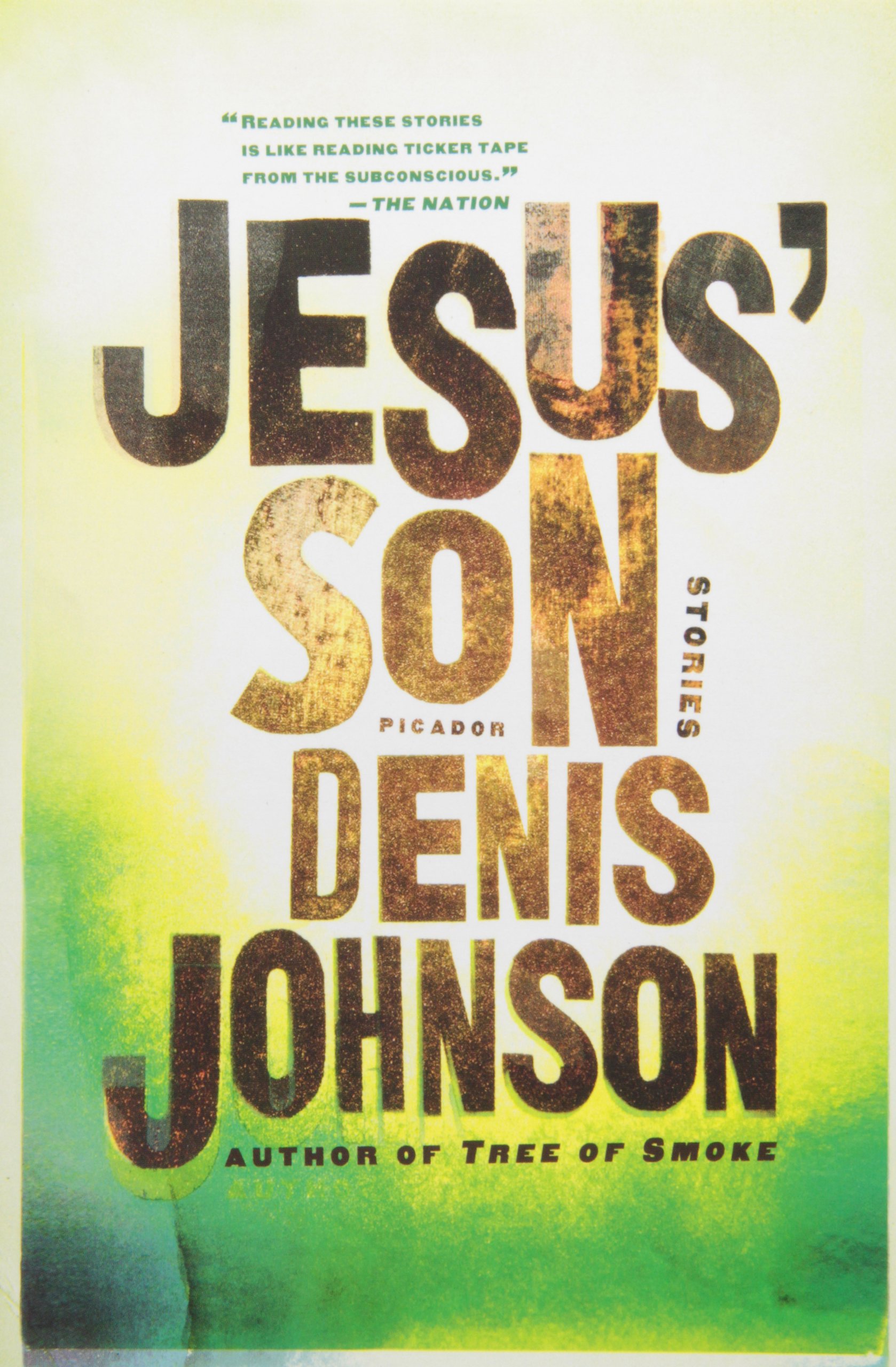
'Emergency' by Denis Johnson

Today on the blog, I am talking about 'Emergency' by Denis Johnson. This is perhaps the most critically acclaimed story in Jesus' Son and much has been written about the story. I hope to contribute new insights into this story based on my own perspective.

This first thing I noticed about 'Emergency' is its pacing. The story jumps around quite a bit and there are many sections which comprise less than a paragraph. I had more fun reading 'Emergency' than I had reading other stories in Jesus' Son. The story is also hilarious. There are clear punchline moments meant to provoke laughter such as when a doctor enters a room where a man sits with a knife protruding from his eye. "What seems to be the trouble?" is the doctor's response to the situation.

"Emergency" is told from the point of view of a man working the overnight shift in the emergency room at a hospital. Drugs are this man's main focus. He is friends with an orderly named Georgie who steals drugs from the hospital. Something about working a graveyard shift messes with the body's rhythms. It's the kind of job someone takes because they would rather walk around doing nothing than work. I have not worked a graveyard shift myself but I can imagine the difficulty of being awake when one would normally be asleep.

This is a story where not a lot happens. Generally I do not mind reading stories like 'Emergency' which lack dramatic conflict. I can enjoy reading fiction without a dramatic narrative because I like to focus more on language and the way that language is used by the storyteller. This is why I read stories. Johnson is a master of using sensory details in his fiction. Reading 'Emergency' give you all kinds of sights, smells and sounds of its world and these details are not overwhelming. Johnson uses sensory detail like a chef might use different spices. They add flavor and variety in a subtle yet noticeable fashion.

The same thing that makes you laugh will make you cry. While I find 'Emergency' to be a funny story, I can't help but acknowledge that the story left me with a tragic feeling. The title alludes to this feeling as well. The story exists in a state of tension where the stakes are life and death. This sentiment is echoed in the final final line of dialogue, where Georgie states the he saves lives for a living. 'Emergency' deals with some heavy ideas and the more you dig into the story's layers of meaning, the richer it becomes. This is what makes 'Emergency' a great work of literature.

If you found this article helpful, you can support Short Fiction Daily here: 

Buy Me a Coffe

February 2, 2018

Analysis of 'Work' by Denis Johnson

My new year's resolution was to write more but I decided to wait a month before writing. I started in February instead of January.

Today I am writing about Denis Johnson's story 'Work' from Jesus' Son.

At the beginning of 'Work' the narrator is not in a good place. He has lost his girlfriend after a fight and he is feeling pretty crappy. He goes to a bar called The Vine where he meets an old friend named Wayne. Instead of passing out in a corner as he planned, our narrator accompanies Wayne on a job. The two men drive in a sixty-dollar Chevrolet to a riverbank next to a dozen abandoned houses. The narrator assumes that this is a burglary job but Wayne asserts, "You can't burgulate a forgotten, empty house." The legality of what is taking place is somewhat unclear but we can probably assume that this job is more honest than the work our narrator is used to doing. There are no victims that we can identify except for the house itself which is of course abandoned and forgotten. If the wires in the house were valuable, they would already have been taken.

Later on we learn that the house belonged to Wayne at one point in time. We are left to imagine what must have happened to Wayne to make him desperate enough to tear down the walls of his own house for the copper wires. The narrator vomits because the work is hard. A boat drives by with a naked woman attached by rope to a kite one hundred feet in the air. This woman is Wayne's wife.

The narrator earns $28 for the copper wire he collected. He goes back to The Vine with Wayne who accuses "the biggest, blackest man in Iowa" of cheating at cards. Wayne somehow survives this confrontation without injury. The narrator admits to this being one of the best days of his life. This sentiment felt a bit strange to me at first since this story is not exactly uplifting. The narrator is feeling much better about himself because he is with his buddy Wayne and he feels tired from working. Not to mention the bartender has been generous when pouring drinks.

I'm most impressed by Johnson's writing style in this story. There are many small moments in this story that appeared unimportant at first but seemed more meaningful on a second reading. The main theme that Johnson explores here is the effect of time passing. The narrator is looking into the past as he tells this story with knowledge of what will happen in the future. The Vine will be demolished and the bartender will be beaten by her boyfriend. These are tragic events but the narrator chooses to focus on why this day was meaningful for him. It's important to find moments of happiness when life is tough.

If you found this article helpful, you can support Short Fiction Daily here: 

Buy Me a Coffe

November 28, 2017

Analysis of 'How' by Lorrie Moore

Today I am talking about 'How' by Lorrie Moore. This is the second story in Moore's collection 'Self-Help' that I will have written about. A common technique in the collection is the use of the second person. The title of 'How' suggests little in terms of what the story is about which is strange because the story does seem to focus on one particular theme: the difficulty of being in a relationship.

The first thing that struck me about 'How' is its form. The story is composed of several blocks of text that are separated by line breaks. There are a few single sentence paragraphs but most of the blocks contain approximately 5-6 sentences. In general the blocks feel somewhat related in terms of their subject matter but they also change quite a bit. This unique style means that you could start reading at pretty much any point in the story and you wouldn't feel any more or less lost than if you started at the beginning.

The main focus of this story is romance. The story's speaker is giving the reader a glimpse into the intimate details of her relationships with numerous men. Similar to other stories in "Self-help" the speaker's tone is that of a mentor or expert providing advice on how to do something. In the case of 'How' the speaker is telling us how to act in relationships without really stating an overarching objective. I did not get the impression that following the speaker's advice would be a wise decision. There is a lot of tension between the narrator and her various lovers.

I greatly admire Moore's writing for its experimentation with form and language, but I find it hard to muster up enough motivation to discuss her work. Her tendency to write about romantic conflict simply does not interest in me in the way that other stories do. It is difficult to discuss the content of a work that upsets you no matter how much you appreciate the writing style of that work.

"There will be an endless series of tests"

Being in a relationship can feel like a constant struggle. The speaker of 'How' feels like she must meet the demands of others over and over again. This sentence reminds me of shit tests, a way of measuring someone's worthiness as a mate by presenting them with a question. I have encountered these before and they are an unavoidable part of being in a relationship. A shit test is usually veiled in some way to appear less important than it actually is.

"The sadness will die like an old dog. You will feel nothing but indifference."

I can't help but feel bad for the narrator. She seems to have good intentions but her actions inevitably lead her down a path of despair. Changing your habits is one of the hardest things to do. While I have a hard time relating to the romantic trials of a single woman, I can empathize with the more general problem of being stuck with a bad habit. Simply put, being able to break a bad habit is one of the most difficult yet integral things that a person can do to make his or her life better.

While reading 'How to Become a Writer' I found myself unable to stop reading. Reading 'How' is a much different experience. Moore's thoughts about writing are insightful and relevant to myself as a creative person but I find her writing about relationships to be much less appealing.

If you found this article helpful, you can support Short Fiction Daily here: 

Buy Me a Coffe


September 12, 2017

Analysis of 'How to Become a Writer' by Lorrie Moore

Lorrie Moore's 'How to Become a Writer' is narrated in the second person by a character named Francine. The story is told in the style of a self-help column directed to people who want to become writers, but the actual content of the story is extremely personal. Moore seems to be making fun of the idea that there exists a universal path to becoming a writer. The truth is that every writer has experienced their own unique journey and no two writers are alike. The narrator's strategy of presenting her own experience as a path that anyone can take is what gives the story a humorous tone.

This is the first of Moore's stories that I have read. I was drawn to the story by its title and immediately hooked after reading the first sentence: "First try to be anything else." Basically, the best way to become a writer is by trying to become something else.


"You will read somewhere that all writing that all writing has to do with one's genitals. Don't dwell on this. It will make you nervous."

This story is filled with statements like this that seem ludicrous at first but actually contain a deeper truth. Not all writing is completely focused on the writer's genitals but one could argue that the motivation to write often stems from sexual frustration.

 The other idea I found interesting from this story is the concept of writing as a kind of sickness. The narrator states that her obsession with writing causes her to lose weight and she compares being a writer to having polio. The narrator characterizes writing as a bad habit that causes her to lose interest in the more important things in her life. When the narrator reveals to her roommate her grand idea of adapting Moby-Dick, she responds by saying the two of them should go out for drinks. It seems like everyone except for the narrator and the other students in her creative writing classes think of writing as a waste of time. And yet this does not make the narrator any less motivated to write, which gives the narrator a heroic quality. She doesn't care what anyone else thinks and that makes her more attractive to the audience.

By far my favorite part of this story is the ending. Here we see the narrator on a dinner date with a man she describes as having a face like a blank piece of paper. What the narrator means by this is anyone's guess. To me it seems that she is once again relating her own motivation to write to her love life. Earlier Francine admits to using a college boyfriend's sense of humor to generate writing material. This idea was also reinforced when the narrator's roommate states at a cocktail party that the narrator's writing always has to do with her boyfriend. So at the end of the story, Francine remains inclined to use her love interests as fuel for her writing. When the narrator jokes that writing is a lot like having polio, her date responds by saying "interesting" and then by smoothing his arm hairs. This small exchange basically encapsulates society's response to hearing the crazy-sounding ideas of artists. Much of the time, when people with normal lives hear artists speak, they would rather do literally anything else. But people will say anything if they think it will get them laid. We put up with the crazy urges of others because we want them to like us. Lorrie Moore knows better than anyone else that creative writing is a fruitless endeavor 99% of the time. It's a somewhat bleak sentiment to express to an audience of aspiring writers but maybe it's exactly what that audience needs to hear.

If you found this article helpful, you can support Short Fiction Daily here: 

Buy Me a Coffe

September 5, 2017

Analysis of 'The Caretaker' by Anthony Doerr

Anthony Doerr is a writer of short stories and novels. Given his tremendous talent as a writer, it is surprising that Doerr is not more well-known. 'The Caretaker' is probably my favorite of his stories. I first read this story several years ago and certain images still linger with me today. This post will analyze key elements of 'The Caretaker' to better understand how the story works.

To begin I will provide a brief plot synopsis of this story.

'The Caretaker' is narrated in the third person by a nameless voice. The protagonist is Joseph Saleeby, a bookkeeper for the Liberian National Cement Company who embezzles a small amount of money each month. Joseph's life is very orderly and regimented until Liberia descends into a civil war that lasts 7 years. Joseph's mother disappears and he leaves his home. He wanders through his country witnessing horror after horror. At one point Joseph shoots a man who may or may not be innocent. Joseph leaves Liberia and finds himself on the Oregon Coast where he is hired as a caretaker by a man named Mr. Twyman. This is where Joseph's actions become more ambiguous and the story increases in complexity.

An Intensity of Detail


To put it simply, Doerr is a master of injecting realistic details into his stories. One could argue that plot is secondary to the detailed descriptions of the objects and things present in the story. Having such an incredible amount of detail brings the story to life and makes imagining the events easier. I imagine that a lot of research went into creating such vivid and realistic descriptions.

Whale Hearts


The defining moment of this story is when Joseph takes it upon himself to bury the hearts of five beached sperm whales. For Joseph, this act is an attempt to atone for the sins he committed in Liberia. It's clear that Joseph has been traumatized. For much of the story, Joseph's actions seem to make very little sense. It's no surprise that Joseph still feels distraught after this difficult act. Perhaps we can look at Joseph's actions in contrast to those of other people who seem to be scavenging whatever they can get from the whales' corpses.

This section of the story almost has a comedic tone to it. I can't help but laugh as Joseph first saws through a decaying whale carcass and then labors to bury them in a massive whole.

"he had told himself it would be like cleaning a fish, but it is completely different - it's more like eviscerating a giant."

This is the kind of thing that would only exist in fiction. What exactly this moment means is still a mystery to me. Joseph feels bad for the whales so he saws through their organs and buries their hearts in a giant whole in the ground.

"The hearts are still there, sitting just beneath the earth, waiting. What good does burying something really do? In nightmares it always manages to dig itself out."

This quote encapsulates what I believe to be the main idea of 'The Caretaker'. Essentially, the idea is that one cannot heal from trauma by burying or neglecting one's emotions. One must face the emotions head on to truly recover. Many of Joseph's decisions stem from a desire to bury his emotions deep within like whale hearts in the dirt. Joseph has this realization and then strategically pivots to burying things that will grow such as seeds.

I find 'The Caretaker' to be truly remarkable but also kind of a bummer to read. I read fiction because I am obsessed with stories and figuring out how they work and I can't help but see 'The Caretaker' as somewhat disappointing. The majority of time is spent with a deeply traumatized man as he labors without any reward. The story's ending does contain some hope as Joseph learns that he can go back to Liberia, but what good is that when Joseph's entire life there has been destroyed?

Ultimately 'The Caretaker' serves to engage readers with an alternate version of reality. Few things in the story make sense and that is okay. Fiction creates experiences that not good or bad. They are simply experiences.

If you found this article helpful, you can support Short Fiction Daily here: 

Buy Me a Coffe

August 13, 2017

Late Fragment by Raymond Carver Analysis

And did you get what
you wanted from this life, even so?
I did.
And what did you want?
To call myself beloved, to feel myself
beloved on the earth.


I am no stranger to Raymond Carver's prose but I cannot say the same for his poetry. Carver is known for a minimalist style championed by his editor and teacher Gordon Lish. These days I find it harder and harder to sit down and read an entire story. Perhaps looking at poetry will get me back in the groove of reading and writing about literature.

The first thing I noticed about Carver's poem 'Late Fragment' is its short length. The poem is six lines long and one line is only two words. The poem reads quickly. I felt I understood the poem completely after reading it two or three times. Lines two and four as a question that is then answered in the following line.

Enough about the poem's structure. Let's get into the content. The repetition of the question "what did you want?" seems to be the essence of the poem. The speaker is asking this question to himself or perhaps to someone else. Whoever is answering the question knows that he has got exactly what he wanted from life. It's the kind of question one would ask in his or her final moments when there is nothing to hide. In typical Carver fashion, the answer is frank: "to call myself beloved, to feel myself beloved on the earth." 

Love is a prominent theme in Carver's fiction as well as in his poetry. I think we could all use a bit more love in the world, especially given the current political climate. We can look to writers such as Carver to remind us what is important in life. What's important to Carver is feeling loved and calling himself loved. It's a simple answer to a question that is often answered with money, power or fame.

Thank you Raymond Carver for reminding me what is truly important in life.