Showing posts with label summary. Show all posts

February 11, 2025

"The Mom of Bold Action" by George Saunders

 George Saunders’ “The Mom of Bold Action” from his collection Liberation Day is a sharp, unsettling story that blends dark humor with a raw exploration of parenting, violence, and the anxiety of trying to raise a child in an unpredictable world. True to Saunders’ style, it’s both wildly entertaining and deeply thought-provoking, with a punch of emotional weight that sneaks up on you.

If you’re into stories that make you laugh uncomfortably while also making you question everything—this one’s for you.


Summary

At the center of the story is a mother—unnamed but unforgettable—who’s fiercely protective of her young son. She’s also struggling to make it as a writer, juggling her creative frustrations with the everyday anxieties of parenting. Life takes a dark turn when her son is randomly attacked by a stranger while walking near their home. The assault isn’t just a physical blow; it fractures her sense of control over the world and ignites an obsessive desire for justice—or maybe revenge.

As she wrestles with this trauma, her mind spirals into anxious, often hilarious inner monologues about parenting, morality, and her own failings. She fixates on tracking down the attacker, convinced that confronting him will somehow restore balance. But Saunders doesn’t make it that simple. What unfolds is a messy, darkly comic journey through grief, guilt, and the murky waters of what it means to be a “good” person—or a “good” mom.


Analysis

At first glance, “The Mom of Bold Action” might seem like a quirky, slightly absurd story about an overprotective parent. But beneath Saunders’ signature humor is a razor-sharp commentary on modern life—especially the anxieties tied to parenting in a world that feels increasingly out of control.

One of the standout elements is the mom’s internal monologue. It’s funny, frantic, and painfully relatable, especially for anyone who’s ever felt overwhelmed by the pressure to be perfect. Saunders captures that constant, buzzing worry: Am I doing enough? Am I protecting my kid? Am I failing? Her obsession with revenge becomes less about the attacker and more about her own fear—fear of helplessness, of failure, of not being able to control the chaos.

The story also plays with the idea of violence—not just the physical act of it, but how it lingers in the mind. The mom’s thoughts become their own battleground, filled with imagined scenarios, moral debates, and existential dread. Saunders seems to ask: What’s scarier—the violence itself, or the way it changes us afterward?

Another key theme is the blurred line between justice and vengeance. The mom believes she’s fighting for what’s right, but as her actions spiral, it’s clear her motivations are tangled up in personal fear and pride. This moral ambiguity is classic Saunders—he’s not interested in easy answers. Instead, he shows how messy real life is, where good intentions don’t always lead to good outcomes.


Final Thoughts

“The Mom of Bold Action” is everything you’d expect from George Saunders—darkly funny, emotionally raw, and deceptively simple on the surface. It’s a story about parenting, sure, but also about the human tendency to seek control in a chaotic world. Saunders perfectly captures that uncomfortable space between fear and courage, love and obsession.

If you’re a fan of stories that make you laugh, cringe, and think (sometimes all in the same paragraph), this one’s definitely worth your time. Liberation Day is full of gems, but this story hits especially hard—probably because it feels so real, even in its absurdity.

If you found this article helpful, you can support Short Fiction Daily here: 

Buy Me a Coffe

September 24, 2018

Literary Innovation in David Foster Wallace's 'Good Old Neon' (2004)

Good Old Neon is my favorite thing written by David Foster Wallace.

'Good Old Neon' is an abnormal story. There is a narrator who talks a great deal about his life and the problem of feeling like a fraud. The bulk of this 41-page story is told in the first person. Essentially the narrator feels that his entire life has been nothing more than an attempt to fabricate an impression of himself for other people. I imagine that many intelligent people have experienced the same problem in their lives.

I would not call this story uplifting but there are several hilarious moments. One of my favorites is the narrator's laundry list of all the things he has tried to combat his problem:

"EST, riding a ten-speed to Nova Scotia and back, hypnosis, cocaine, sacro-cervical chiropractic, joining a charismatic church, jogging, pro bono work for the Ad Council, meditation classes, the Masons, analysis, the Landmark Forum, the Course in Miracles, a right-brain drawing workshop, celibacy, collecting and restoring vintage Corvettes, and trying to sleep with a different girl every night for two straight months."

I can't help but think that Wallace himself has tried many of these things himself. When you're depressed, it makes sense to try different activities to relieve your depression. I'm sure many of us can attest to trying a few of these activities. I've tried right-brain drawing, meditation and volunteering for a non-profit. Personally I've found meditation to be the most effective.

While re-reading Good Old Neon, I couldn't help but feel a bit disgusted at the narrator. He's not likable and its hard to read 41-pages that feel almost copied verbatim from his mind. It's a frustrating story to read because of its length and the reprehensible actions of the narrator. I was carried through by my interest in psychology since the narrator is prone to explaining things in a very no-nonsense manner.

One of the most bizarre aspects of this story involves the narrator and his relationship to a character named David Wallace. Without giving away anything, there is shift in perspective in the final few pages that caused me to reconsider the entire story in a new light. This shift is also what makes me wonder how much of 'Good Old Neon' is taken from Wallace's personal experiences.

I can't say that I recommend that you read 'Good old Neon' or any of the stories in Oblivion. I will say that this is one of the most thought-provoking things I have ever read. If there's one thing to applaud in Wallace's work, it's the innovative experimental nature of works such as this. The only thing I can think to compare with 'Good Old Neon' is Dostoevsky's 'Notes from the Underground.'  These works share a troubled first-person narrator who feels alienated from society. In reading these stories, one feels uneasiness at seeing the thoughts of a disturbed person. It's like these thoughts were never meant to be revealed in the first place.

While I can't say that 'Good Old Neon' is enjoyable, I can say that it is a unique reading experience. The story displays Wallace's tremendous strengths as a writer, making it a good story for aspiring fiction writers to examine.

If you found this article helpful, you can support Short Fiction Daily here: 

Buy Me a Coffe


May 7, 2018

The Kiss by Anton Chekhov

In 'The Kiss' by Anton Chekhov several military officers are invited to an aristocrat's house at night to partake in a party. The military officers are worried about going to the party because they recently experienced a similar situation where a rich old dude kept them up all night talking about boring stuff. But this party turns out to be a lot better than that experience. There are women, dancing and drinks at this party which creates an awkward situation for one soldier in particular named Ryabovich. For every other soldier, this is seemingly not an awkward situation. Ryabovich is decribed as shy, modest and undistinguished in comparison to his fellow soldiers.

Ryabovich enters a dark room where he is kissed by a woman who mistakes Ryabovich for another man. This accidental kiss has a profound effect on Ryabovich. In the days following the party, he thinks about the kiss constantly and it gives him something nice to think about while going through the day-to-day of a soldier's routine.

This is basically all there is to the story. There is also the detailed descriptions of scenery that for me exemplify Chekhov's unique writing style. The way that Chekhov describes the setting of his story is similar to a painter. Chekhov uses visual language which allowed me to imagine the story in rich detail. Here is an example:

'The red moon was reflected near the left bank; little ripples ran over the reflection, stretching it out, breaking it into bits, and seemed trying to carry it away...'

Writing such as this is my favorite thing about Chekhov's stories. The scenery is so richly imagined and described that it almost takes precedence over the story. I know that Chekhov was interested in landscape painting and this interest is reflected often in his stories. In a story like 'The Kiss' where the plot is short, I find myself looking more at Chekhov's descriptions to find insight regarding the story.

At the end of the 'The Kiss' we can see a distinct change in Ryabovich's mental state. At first Ryabovich daydreams about the kiss, causing him to feel pleasure while going through his daily routine. But after revealing the incident to his comrades, Ryabovich's emotions change drastically. "And the whole world, the whole of life, seemed to Ryabovich an unintelligible, aimless jest." This character arc left me with a sad feeling regarding this story. It would seem that Ryabovich would be better off without the kiss from the woman because it merely opened his eyes to what his life is lacking. It's the kind of encounter that is so far removed from daily life that it opens one's eyes to how unpleasant life is in comparison to other people. Just a tiny taste of a better life has left Ryabovich in a depressed state. It's the kind of revelation that leads people to abandon their jobs in the search of something better. Indeed the story ends with Ryabovich refusing the next invitation to a party in favor of going to sleep in his tent.

Here are some other things I noticed about the story:

  • The story's unique structure. There is one climactic event (the kiss) that takes place early on and the rest of the story examines the effects of this climactic event on the story's protagonist.
  • The social obligation that requires wealthy families to invite military officers to their home. It provides a great setup for this story.

If you found this article helpful, you can support Short Fiction Daily here: 
Buy Me a Coffe


April 30, 2018

Analysis of 'Pastoralia' by George Saunders

As you may or may not know, I am a pretty big fan of George Saunders' work. 'Pastoralia' is the first story in Saunders' collection of stories titled 'Pastoralia' that was first published in 2000. This collection is interesting in that it only contains 6 stories each of which originally appeared in the New Yorker. This collection also contains my favorite of Saunders' stories, 'Sea Oak,' which I have written about here if you are interested.

Pastoralia inspired the Geico caveman television ad.

Here is the fun part where I explain the strange world of 'Pastoralia." I greatly enjoyed entering the bizarre world inhabited by the story's characters and seeing how those characters interacted with each other. 'Pastoralia' is the story of a man whose job is to impersonate a caveman at an amusement park. The man's goal is to impersonate a caveman as authentically as possible while also providing a pleasant experience for guests. This man narrates the story in first person with a very dry sense of humor. He describes the daily tasks of his job such as roasting goats or squatting and pretending to eat bugs like a bureaucrat working in an office.

The second most prominent character in the story is Janet, whose job is to play the caveman wife of the narrator. Janet does not do a good job of playing a caveman. She speaks english in the cave when she is not supposed to and she has much less passion for her job than the narrator does. Fortunately for Janet, the narrator does not want to rat out Janet's poor performance in the performance reviews that he fills out each night and faxes to his supervisor. But Janet's performance becomes so bad that the narrator has no choice but to disclose Janet's failures as a cavewoman. This is the main conflict of the story: the narrator's internal struggle of whether to accurately fill out a performance review that would cause Janet to be fired.

I loved this story. Saunders is one of the best at portraying the monotony of having a boring job. The way that certain phrases and actions are repeated throughout the story is one of my favorite things about it. For example the narrator says each day whether or not someone has poked their head in, meaning a visitor has come to his cave. In the past the narrator says that people would "poke their heads in" all the time but now this happens much less frequently. The repetition of phrases such as this makes it easier to feel the narrator's strange experience. While I could see how someone might interpret the repetition of phrases as bothersome, I am thankful that Saunders used this technique and I believe that it makes the story better.

At the end of 'Pastoralia' Janet is fired and replaced by another woman named Linda who possesses a permanently installed uni-brow. The narrator is encouraged by his supervisor to obtain a permanent uni-brow for himself. The narrator is also surprised by his new coworker's commitment to playing a cave-woman. She squats and pretends to eat bugs all afternoon and even eats a bug. There's a sense that life will continue as normal for the narrator with the exception of one thing: he will now have to be even more committed to caveman authenticity because of the pressure to match his co-worker's dedication.

It has been a few months since I have felt the urge to write about a story I have read. Reading Saunders' 'Pastoralia' rekindled my need to process the sheer absurdity of what I read through the act of writing down my thoughts. This is a story I know I will come back to again and again. I recommend it to anyone who is in need of a good laugh or who wants to enter the world of a caveman impersonator.

If you found this article helpful, you can support Short Fiction Daily here: 

Buy Me a Coffe

March 2, 2018

'Emergency' by Denis Johnson

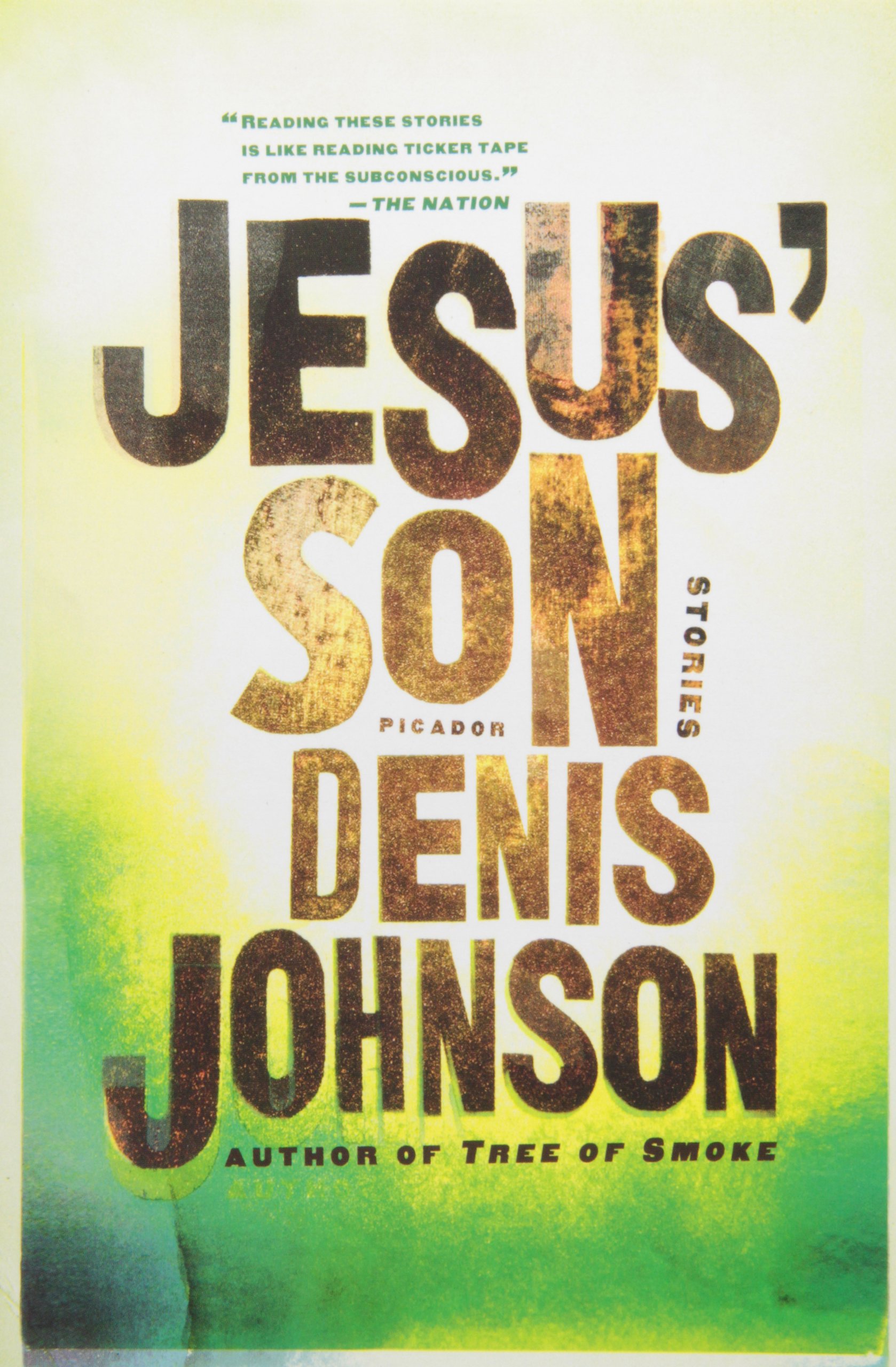
Today on the blog, I am talking about 'Emergency' by Denis Johnson. This is perhaps the most critically acclaimed story in Jesus' Son and much has been written about the story. I hope to contribute new insights into this story based on my own perspective.

This first thing I noticed about 'Emergency' is its pacing. The story jumps around quite a bit and there are many sections which comprise less than a paragraph. I had more fun reading 'Emergency' than I had reading other stories in Jesus' Son. The story is also hilarious. There are clear punchline moments meant to provoke laughter such as when a doctor enters a room where a man sits with a knife protruding from his eye. "What seems to be the trouble?" is the doctor's response to the situation.

"Emergency" is told from the point of view of a man working the overnight shift in the emergency room at a hospital. Drugs are this man's main focus. He is friends with an orderly named Georgie who steals drugs from the hospital. Something about working a graveyard shift messes with the body's rhythms. It's the kind of job someone takes because they would rather walk around doing nothing than work. I have not worked a graveyard shift myself but I can imagine the difficulty of being awake when one would normally be asleep.

This is a story where not a lot happens. Generally I do not mind reading stories like 'Emergency' which lack dramatic conflict. I can enjoy reading fiction without a dramatic narrative because I like to focus more on language and the way that language is used by the storyteller. This is why I read stories. Johnson is a master of using sensory details in his fiction. Reading 'Emergency' give you all kinds of sights, smells and sounds of its world and these details are not overwhelming. Johnson uses sensory detail like a chef might use different spices. They add flavor and variety in a subtle yet noticeable fashion.

The same thing that makes you laugh will make you cry. While I find 'Emergency' to be a funny story, I can't help but acknowledge that the story left me with a tragic feeling. The title alludes to this feeling as well. The story exists in a state of tension where the stakes are life and death. This sentiment is echoed in the final final line of dialogue, where Georgie states the he saves lives for a living. 'Emergency' deals with some heavy ideas and the more you dig into the story's layers of meaning, the richer it becomes. This is what makes 'Emergency' a great work of literature.

If you found this article helpful, you can support Short Fiction Daily here: 

Buy Me a Coffe

February 2, 2018

Analysis of 'Work' by Denis Johnson

My new year's resolution was to write more but I decided to wait a month before writing. I started in February instead of January.

Today I am writing about Denis Johnson's story 'Work' from Jesus' Son.

At the beginning of 'Work' the narrator is not in a good place. He has lost his girlfriend after a fight and he is feeling pretty crappy. He goes to a bar called The Vine where he meets an old friend named Wayne. Instead of passing out in a corner as he planned, our narrator accompanies Wayne on a job. The two men drive in a sixty-dollar Chevrolet to a riverbank next to a dozen abandoned houses. The narrator assumes that this is a burglary job but Wayne asserts, "You can't burgulate a forgotten, empty house." The legality of what is taking place is somewhat unclear but we can probably assume that this job is more honest than the work our narrator is used to doing. There are no victims that we can identify except for the house itself which is of course abandoned and forgotten. If the wires in the house were valuable, they would already have been taken.

Later on we learn that the house belonged to Wayne at one point in time. We are left to imagine what must have happened to Wayne to make him desperate enough to tear down the walls of his own house for the copper wires. The narrator vomits because the work is hard. A boat drives by with a naked woman attached by rope to a kite one hundred feet in the air. This woman is Wayne's wife.

The narrator earns $28 for the copper wire he collected. He goes back to The Vine with Wayne who accuses "the biggest, blackest man in Iowa" of cheating at cards. Wayne somehow survives this confrontation without injury. The narrator admits to this being one of the best days of his life. This sentiment felt a bit strange to me at first since this story is not exactly uplifting. The narrator is feeling much better about himself because he is with his buddy Wayne and he feels tired from working. Not to mention the bartender has been generous when pouring drinks.

I'm most impressed by Johnson's writing style in this story. There are many small moments in this story that appeared unimportant at first but seemed more meaningful on a second reading. The main theme that Johnson explores here is the effect of time passing. The narrator is looking into the past as he tells this story with knowledge of what will happen in the future. The Vine will be demolished and the bartender will be beaten by her boyfriend. These are tragic events but the narrator chooses to focus on why this day was meaningful for him. It's important to find moments of happiness when life is tough.

If you found this article helpful, you can support Short Fiction Daily here: 

Buy Me a Coffe

November 28, 2017

Analysis of 'How' by Lorrie Moore

Today I am talking about 'How' by Lorrie Moore. This is the second story in Moore's collection 'Self-Help' that I will have written about. A common technique in the collection is the use of the second person. The title of 'How' suggests little in terms of what the story is about which is strange because the story does seem to focus on one particular theme: the difficulty of being in a relationship.

The first thing that struck me about 'How' is its form. The story is composed of several blocks of text that are separated by line breaks. There are a few single sentence paragraphs but most of the blocks contain approximately 5-6 sentences. In general the blocks feel somewhat related in terms of their subject matter but they also change quite a bit. This unique style means that you could start reading at pretty much any point in the story and you wouldn't feel any more or less lost than if you started at the beginning.

The main focus of this story is romance. The story's speaker is giving the reader a glimpse into the intimate details of her relationships with numerous men. Similar to other stories in "Self-help" the speaker's tone is that of a mentor or expert providing advice on how to do something. In the case of 'How' the speaker is telling us how to act in relationships without really stating an overarching objective. I did not get the impression that following the speaker's advice would be a wise decision. There is a lot of tension between the narrator and her various lovers.

I greatly admire Moore's writing for its experimentation with form and language, but I find it hard to muster up enough motivation to discuss her work. Her tendency to write about romantic conflict simply does not interest in me in the way that other stories do. It is difficult to discuss the content of a work that upsets you no matter how much you appreciate the writing style of that work.

"There will be an endless series of tests"

Being in a relationship can feel like a constant struggle. The speaker of 'How' feels like she must meet the demands of others over and over again. This sentence reminds me of shit tests, a way of measuring someone's worthiness as a mate by presenting them with a question. I have encountered these before and they are an unavoidable part of being in a relationship. A shit test is usually veiled in some way to appear less important than it actually is.

"The sadness will die like an old dog. You will feel nothing but indifference."

I can't help but feel bad for the narrator. She seems to have good intentions but her actions inevitably lead her down a path of despair. Changing your habits is one of the hardest things to do. While I have a hard time relating to the romantic trials of a single woman, I can empathize with the more general problem of being stuck with a bad habit. Simply put, being able to break a bad habit is one of the most difficult yet integral things that a person can do to make his or her life better.

While reading 'How to Become a Writer' I found myself unable to stop reading. Reading 'How' is a much different experience. Moore's thoughts about writing are insightful and relevant to myself as a creative person but I find her writing about relationships to be much less appealing.

If you found this article helpful, you can support Short Fiction Daily here: 

Buy Me a Coffe


September 12, 2017

Analysis of 'How to Become a Writer' by Lorrie Moore

Lorrie Moore's 'How to Become a Writer' is narrated in the second person by a character named Francine. The story is told in the style of a self-help column directed to people who want to become writers, but the actual content of the story is extremely personal. Moore seems to be making fun of the idea that there exists a universal path to becoming a writer. The truth is that every writer has experienced their own unique journey and no two writers are alike. The narrator's strategy of presenting her own experience as a path that anyone can take is what gives the story a humorous tone.

This is the first of Moore's stories that I have read. I was drawn to the story by its title and immediately hooked after reading the first sentence: "First try to be anything else." Basically, the best way to become a writer is by trying to become something else.


"You will read somewhere that all writing that all writing has to do with one's genitals. Don't dwell on this. It will make you nervous."

This story is filled with statements like this that seem ludicrous at first but actually contain a deeper truth. Not all writing is completely focused on the writer's genitals but one could argue that the motivation to write often stems from sexual frustration.

 The other idea I found interesting from this story is the concept of writing as a kind of sickness. The narrator states that her obsession with writing causes her to lose weight and she compares being a writer to having polio. The narrator characterizes writing as a bad habit that causes her to lose interest in the more important things in her life. When the narrator reveals to her roommate her grand idea of adapting Moby-Dick, she responds by saying the two of them should go out for drinks. It seems like everyone except for the narrator and the other students in her creative writing classes think of writing as a waste of time. And yet this does not make the narrator any less motivated to write, which gives the narrator a heroic quality. She doesn't care what anyone else thinks and that makes her more attractive to the audience.

By far my favorite part of this story is the ending. Here we see the narrator on a dinner date with a man she describes as having a face like a blank piece of paper. What the narrator means by this is anyone's guess. To me it seems that she is once again relating her own motivation to write to her love life. Earlier Francine admits to using a college boyfriend's sense of humor to generate writing material. This idea was also reinforced when the narrator's roommate states at a cocktail party that the narrator's writing always has to do with her boyfriend. So at the end of the story, Francine remains inclined to use her love interests as fuel for her writing. When the narrator jokes that writing is a lot like having polio, her date responds by saying "interesting" and then by smoothing his arm hairs. This small exchange basically encapsulates society's response to hearing the crazy-sounding ideas of artists. Much of the time, when people with normal lives hear artists speak, they would rather do literally anything else. But people will say anything if they think it will get them laid. We put up with the crazy urges of others because we want them to like us. Lorrie Moore knows better than anyone else that creative writing is a fruitless endeavor 99% of the time. It's a somewhat bleak sentiment to express to an audience of aspiring writers but maybe it's exactly what that audience needs to hear.

If you found this article helpful, you can support Short Fiction Daily here: 

Buy Me a Coffe

September 5, 2017

Analysis of 'The Caretaker' by Anthony Doerr

Anthony Doerr is a writer of short stories and novels. Given his tremendous talent as a writer, it is surprising that Doerr is not more well-known. 'The Caretaker' is probably my favorite of his stories. I first read this story several years ago and certain images still linger with me today. This post will analyze key elements of 'The Caretaker' to better understand how the story works.

To begin I will provide a brief plot synopsis of this story.

'The Caretaker' is narrated in the third person by a nameless voice. The protagonist is Joseph Saleeby, a bookkeeper for the Liberian National Cement Company who embezzles a small amount of money each month. Joseph's life is very orderly and regimented until Liberia descends into a civil war that lasts 7 years. Joseph's mother disappears and he leaves his home. He wanders through his country witnessing horror after horror. At one point Joseph shoots a man who may or may not be innocent. Joseph leaves Liberia and finds himself on the Oregon Coast where he is hired as a caretaker by a man named Mr. Twyman. This is where Joseph's actions become more ambiguous and the story increases in complexity.

An Intensity of Detail


To put it simply, Doerr is a master of injecting realistic details into his stories. One could argue that plot is secondary to the detailed descriptions of the objects and things present in the story. Having such an incredible amount of detail brings the story to life and makes imagining the events easier. I imagine that a lot of research went into creating such vivid and realistic descriptions.

Whale Hearts


The defining moment of this story is when Joseph takes it upon himself to bury the hearts of five beached sperm whales. For Joseph, this act is an attempt to atone for the sins he committed in Liberia. It's clear that Joseph has been traumatized. For much of the story, Joseph's actions seem to make very little sense. It's no surprise that Joseph still feels distraught after this difficult act. Perhaps we can look at Joseph's actions in contrast to those of other people who seem to be scavenging whatever they can get from the whales' corpses.

This section of the story almost has a comedic tone to it. I can't help but laugh as Joseph first saws through a decaying whale carcass and then labors to bury them in a massive whole.

"he had told himself it would be like cleaning a fish, but it is completely different - it's more like eviscerating a giant."

This is the kind of thing that would only exist in fiction. What exactly this moment means is still a mystery to me. Joseph feels bad for the whales so he saws through their organs and buries their hearts in a giant whole in the ground.

"The hearts are still there, sitting just beneath the earth, waiting. What good does burying something really do? In nightmares it always manages to dig itself out."

This quote encapsulates what I believe to be the main idea of 'The Caretaker'. Essentially, the idea is that one cannot heal from trauma by burying or neglecting one's emotions. One must face the emotions head on to truly recover. Many of Joseph's decisions stem from a desire to bury his emotions deep within like whale hearts in the dirt. Joseph has this realization and then strategically pivots to burying things that will grow such as seeds.

I find 'The Caretaker' to be truly remarkable but also kind of a bummer to read. I read fiction because I am obsessed with stories and figuring out how they work and I can't help but see 'The Caretaker' as somewhat disappointing. The majority of time is spent with a deeply traumatized man as he labors without any reward. The story's ending does contain some hope as Joseph learns that he can go back to Liberia, but what good is that when Joseph's entire life there has been destroyed?

Ultimately 'The Caretaker' serves to engage readers with an alternate version of reality. Few things in the story make sense and that is okay. Fiction creates experiences that not good or bad. They are simply experiences.

If you found this article helpful, you can support Short Fiction Daily here: 
Buy Me a Coffe

June 12, 2017

Analysis of 'Sea Oak' by George Saunders

I have read many of George Saunders' stories over the past few years. It's surprising that I have yet to write about 'Sea Oak'. The hero of this story works as a male stripper at an establishment called Joysticks. It's common for the customers at Joysticks to offer the employees money in exchange for a flash of the genitals or a picture of a butt. Clearly the men working at Joysticks are objectified yet the main character seems grateful for his job. Perhaps the fact that he is rated a "honeypie" provides a boost to his self-esteem.

Saunders is no stranger to inventing bizarre work environments. This is actually one of his go-to techniques as a fiction writer. The heroes of these stories encounter problems when they fail at their jobs (see 'The Wavemaker Falters') or they are pressured to break the rules. (see 'Offloading for Mrs. Schartz'). Sea Oak is different because the inciting incident of the story involves the hero's life away from work.

Humor is the most effective element of 'Sea Oak'. If any story proves that Saunders is a master of comedy, this is probably the best example. It seems like every section ends in a punchline that propels you into the next section. Sometimes it feels as though the jokes are making fun of the characters so I could see how someone might find the humor offensive. But this type of humor usually works on me pretty well.

There are so many things going on in 'Sea Oak' that it can seem a bit overwhelming. The most integral part of the story is the death and resurrection of Aunt Bernie. There is no explanation for why this happens. Aunt Bernie rises from the dead to deliver life advice to the members of her family. "Show your cock" she says to the narrator so that he can make more money at work. I wonder how Saunders conceived of this aspect of the story because it's ludicrous. This foreshadows some of the bizarre plot events that occur in his later stories.

'Sea Oak' ends on a strangely uplifting note. The is a story where the characters seem to be on a downward spiral into poverty. The narrator's plan to "show his cock" seems to work because he is planning to move his family into a safer apartment. But I would hesitate to call 'Sea Oak' an inspiring story. After reading 'Sea Oak" you come away with better understanding of people living in austere environments. If you have lived you entire life comfortably, then this is an important idea to learn.

If you found this article helpful, you can support Short Fiction Daily here: 

Buy Me a Coffe


June 3, 2017

Analysis of 'Television' by Lydia Davis

Lydia Davis is known for her experimental stories that are often quite compact. She experiments with form more than any other contemporary writer. 'Television' is a four-page exploration of what television does for people watching it and how television makes life better.


Imagery


In describing what is on TV, the narrator uses vivid imagery. There are zombies, a woman with a pearl necklace, a mother with bad teeth, a father with a broad smile. The images we see on television are so realistic that reality becomes secondary. Or perhaps reality is filtered through the medium of television, but it is always someone else's reality. The voyeurism of watching television is what makes it so appealing but this would not be possible without the realistic and vivid pictures that TV displays.


Unique Structure


'Television' is divided into three distinct sections that are roughly the same length. The first section focuses on the reasons why people watch television. There are many sentence long paragraphs. The second section is also choppy with several paragraphs separated by a single line. The third section contains four longer and connected paragraphs about the narrator's individual experience watching movies late at night. TV becomes an escape for the narrator away from her own life and into other more interesting lives. The many line breaks and transitions has the effect of giving the story a faster pace and it makes the story easy to read. I feel that the structure of the piece is a reflection of the narrator's internal dialogue.


Moral of the Story


After reading this story over a few times, I came to the conclusion that TV is quite helpful. TV seems like the perfect tool for escaping from your own life when it gets stressful and TV also provides entertainment. While the story never explicitly states that TV is good, it can be inferred from statements such as, "there is some real satisfaction in getting this information about the next day's weather" or "they say it will be exciting and it always is"

For a lonely person, television can be a godsend. Rather than waste away doing nothing, TV at least provides a way of killing time that is not entirely useless. For busy people, television is a welcome distraction from the stress and monotony of daily life. Television, when used responsibly, is an amazing tool. If you have been raised your entire life with television, it is incredibly difficult to imagine life without it.

Television is good. This was my takeaway from reading 'Television' by Lydia Davis.

If you found this article helpful, you can support Short Fiction Daily here: 

Buy Me a Coffe

March 22, 2017

"Any Corpse" by Brian Evenson

An unforgettable masterpiece from the best horror writer working today.


As I read through Brian Evenson's latest collection of stories "A Collapse of Horses" certain stories linger with me longer than others. The first story with such an effect is "Black Bark" which you can read my thoughts on here. Another story that is difficult story to forget is "Any Corpse" which I am going to write about now.

"Any Corpse" begins with a shower of raw flesh falling from the sky. We have a female POV observing furnishers, human-like creatures that prod at the raw flesh and attempt to sell it in exchange for beads. We then learn that our female protagonist desires an alive and in tact human body. The premise of this story is bizarre to say the least. We learn that our protagonist is one of many who live in caves and who possess a tablature used to perform a ritual. Later the protagonist asks the furnishers for a corpse. The furnishers respond by asking "what corpse?" to which the protagonist says "any corpse," so long that it is freshly dead. The protagonist fails to understand that "any corpse" includes herself so she is killed by the furnishers. 

After the furnishers kill the protagonist, they expect the protagonists corpse to provide payment. The furnishers would almost be adorable if they weren't murderous humanoid creatures who make a living selling flesh. What's frustrating about this story is that we don't know enough about the furnishers. Why are they called furnishers? What are beads and why do the furnishers desire them? I would very much like to pick Evenson's brain to understand where he got the inspiration for this story.


In the second half of this story, we switch to a male protagonist in the same situation as the first one. He also is searching for a recently deceased body. He meets up with some furnishers and buys the woman's body from the first half. He performs a ritual that revives the corpse and begins asking questions. The corpse is not exactly cooperative. She ends up spitting in the mans face before she dies again for good. 

Later on our male protagonist intends to cook and eat the woman's body. A group of furnishers come to the man's cave. The man asks for another body and ends up making the same mistake as the woman by saying that any corpse will do. The story ends with the furnishers gathered outside of the cave saying "person please out of cave."

While reading Evenson's stories, I often feel just as confused as the characters in said stories. I find myself motivated to read his stories because I want to understand the mysterious events taking place. Unfortunately I am never able to satisfy this urge. When the story ends I am just as clueless as when I started reading. Evenson does not explain why his stories are so weird. Doing so would take away from their power. Evenson's best technique is how he creates such disturbing stories without ever explaining how they work. It is clear that too much explanation would be detrimental to the effect that Evenson hopes to create. The more that we understand what's going, the more comfortable that we feel. Evenson is clearly a literary madman whose goal is to make his readers as confused and as disturbed as possible.

If you found this article helpful, you can support Short Fiction Daily here: 

Buy Me a Coffe

March 7, 2017

Black Bark by Brian Evenson

Summary and Analysis


Brian Evenson's Black Bark is a story you could read a hundred times and you still would not understand what's going on. It's a story with supernatural elements that refuses to explain why they exist. Reading the story is like briefly entering another world that is frightening yet oddly entrancing because you are dying for an explanation as to what is going on.

Black Bark is about two characters named Sugg and Rawley. Both are cowboys riding horses looking for a cabin that may or may not exist. They are apparently running away from something and Sugg has suffered a nasty injury to his leg. Rawley is the protagonist of the story. The reader is meant to experience the story through Rawley's perspective whereas Sugg functions as an antagonist to Rawley. The weird thing about Sugg is that he disappears seemingly out of thin air several times in the story which makes me think that he does not actually exist. Sugg's disappearing act is the only supernatural element in the story. Sugg also sticks his hand into a fire without reacting and tells Rawley a weird story called "Black Bark" about a man who finds a piece of black bark in his pocket that keeps reappearing even after the man takes the bark out of his pocket.

The presence of this story within a story sheds light on the themes of this story. Rawley's main reaction to the story is that of confusion. He wants a deeper explanation of the events that are left out of black bark but Rawley refuses, claiming that he is presenting the story as it is. Sugg's story is the kind of thing you would imagine while you were tripping on acid. This make Rawley's reaction to the story quite understandable.

What I love the most about this story is how crazy and mysterious it is. The setting by itself is intriguing before it introduces the bizarre elements of Sugg's character. It's compelling to watch Rawley struggle to keep himself alive while dealing with whatever the hell is going on with his companion. At the end I was left with the question of whether Sugg was a figment of Rawley's imagination or some higher power was speaking through Sugg. A recurring image in the story is that of the blood angel that appears on Sugg's horse and later on the ground where Sugg lies in a cave. The blood angel is described as vaguely human shaped. Perhaps this is the symbol of whatever high power is controlling the environment in this story. It's incredible what kind of work your mind will do to explain what's going on when not everything is explained.

I believe that is the main goal of Evenson's story: to create a situation where not everything is explained and the events are compelling. This drives the reader to create their own explanations because it is uncomfortable not knowing why these things are happening. It's also a lot easier on Evenson's part to not have to explain the workings behind the strange events in the story. Why should Evenson have to explain why things are the way they are? Is that what a story is supposed to do?

People are raised on stories that mimic reality where all that happens is consistent with the rules of reality. But a story is not reality. A story is a collection of words on a page assembled to create meaning and there are ways to create meaning that exist outside of the normal mode of storytelling. Evenson is one of the best writers at making you feel that disturbed uncanny valley feeling. I greatly enjoyed this story and I look forward to reading and writing about more of Evenson's stories in his new collection. If there is one writer I hope to emulate in my own writing, it is Brian Evenson. I feel his methods for fiction writing are both practical from the perspective of a writer and useful for creating stories that linger with a reader long after the story has been read.

If you found this article helpful, you can support Short Fiction Daily here:

buymeacoffee.com/shortfictiondaily

February 23, 2017

Revelation - Flannery O'Connor

Revelation by Flannery O'Connor is narrated in the third person. The main character in the story is a woman named Mrs. Turpin who firmly believes that people such as herself are superior to other people. If you have read any of Flannery O'Connor's other stories, then you know that this is the type of character who is usually punished in O'Connor's fiction. O'Connor spells out Mrs. Turpin's hypocritical worldview in the following way:

"There was nothing you could tell her about people like them that she didn't already know. And it was not just that they didn't have anything. Because if you gave tehm everything, in two weeks it would all be broke nor filthy or they would have chopped it up for lightwood. She knew all this from her own experience. Help them you must, but help them you couldn't."

Mrs. Turpin is an expert at finding reasons to think that other people are less than her. The Christian sentiment that it is important to help those less fortunate than oneself is undercut by Mrs. Turpin's theory that the less fortunate people of the world are beyond help due to their nature. This idea is fundamental to Mrs. Turpin's worldview.

The most entertaining portion of this story occurs when Mrs. Turpin is attacked by a young lady while sitting in a doctor's waiting room. The lady calls Mrs. Turpin a "wart hog from hell" before she is escorted away by security. This insult shakes Mrs. Turpin down to the core. When she's back at home, it is all she can think about. She is utterly unable to understand how anyone could see her as a "wart hog from hell" because she sees herself as an embodiment of God's chosen people. Later on Mrs. Turpin is washing down the hogs at home when she has a holy hallucination that brings home the main point of the story:

"There were whole companies of white-trash, clean for the first time in their lives, and bands of black niggers in white robes, and battalions of freaks and lunatics shouting and clapping and leaping like frogs. And bringing up the end of the procession was a tribe of people whom she recognized at once as those who like herself and Claud, had always had a little of everything and the God-given wit to use it right."

This vision suggests that all are equal in the eyes of God since all classes of people can be seen walking towards heaven. The fact that Mrs. Turpin sees people like herself at the end of the procession may suggest that she is the last to get in to heaven. It's surprisingly difficult to interpret this final vision of the story because it doesn't cater to the reader's expectations. We expect Mrs. Turpin to finally understand that everyone is equal and that she has lived a life of unjustified superiority. What Mrs. Turpin is unable to understand is why the people whom she perceives as less worthy than herself are just as entitled to heaven.

This ending is too religious for me. I am culturally Jewish but I have never been religious in the sense that I believe in a literal God or afterlife. This is what makes reading O'Connor's stories difficult for me. Its hard to put myself in the shoes of anyone who makes religion the first priority in their life. I don't have anything against religion or religious people but most of the time I don't really see a difference between religion and brainwashing. So when characters in a story have religious visions without the aid of hallucinogenic drugs, I get a little annoyed because it reminds me that what I am reading is ultimately one person's view of how the world works. Stories such as "good country people" and "A Good Man is hard to find" are some of my favorites stories ever, but I can't help but think of Flannery O'Connor as someone who watches Fox News and takes it as fact.

If you want to read someone else's thoughts on "Revelation" check out this post from the Sitting Bee, a site that I hope will one day be talked about in the same conversation as Short Fiction Daily.

As always thank you reading and feel free to leave your thoughts in a comment below. Also check out some of my other posts on Flannery O'Connor stories that I have enjoyed a lot more than this one.

Related Posts:
Buy Here:


February 20, 2017

"The Chameleon" by Chekhov

Summary and Analysis


"The Chamelon" is one of Chekhov's shorter stories at a length of nearly four pages but that doesn't make the story any less compelling. In classic Chekhov fashion, "The Chameleon" expresses a deep truth about human behavior in a detailed setting. The title refers to a police officer named Ochumelov (Russian for wacky) who changes his mind several times about how to act in a situation where he doesn't know all the facts.

Experience Chekhov's brilliant wit and deep insight for yourself—get your copy of The Chameleon and other timeless tales today!

At first Ochumelov is tempted to side with the man whose finger was bitten in part because the situation seems trivial and Ochumelov wants to dispense justice because it seems like a rational decision. When a member of a crowd yells that the dog belongs to a general, Ochumelov in turn assumes that the bitten man deserves all of the blame. Chekhov ends the story by revealing that the dog belongs to a general's brother. This reveal allows Ochumelov to settle on a decision to rescue the dog and punish the injured man.
The moral of this story is fairly easy to deduce. People change their behavior to suit their own needs regardless of how it affects others. When you really think about it, this is a sad lesson to learn. People will behave this way even in situations that with low stakes. The story's tension comes from the mystery of what really happened and the reader's uncertainty as to what will happen to the various characters in the story. Thankfully Chekhov lets us off the hook by allowing the dog to be saved and ending the story before the injured man can be further punished.

I'm curious as to whether Chekhov wrote this story as an allegory. My translation includes asterisks that reveal meanings behind the characters' names but these meanings seem to serve a comical function rather than an ethical one. I would say this is the most comedic Chekhov story I have read to date. Touches like a crowd appearing out of nowhere and Ochumelov's subtle facial expressions make this story feel like a cartoon. Chekhov realizes the humor in his stories even when the subject matter is quite dark.

If you found this article helpful, you can support Short Fiction Daily here: 

Buy Me a Coffe


February 15, 2017

"About Love" by Anton Chekhov

“About Love” by Chekhov begins with three characters discussing the nature of love. One of these characters named Alyohin states that love is a “great mystery” that consists of “questions that have remained unanswered.” Alyohin uses this discussion as an opportunity to tell a story about his experience of love.             

The way the story begins is made by Chekhov to seem arbitrary. The character could have just as easily been discussing the nature of hate rather than love. This is simply how the characters in the story choose to pass the time. I’m uncertain what this adds to the story other than a frame but it’s an interesting technique nonetheless.

Alyohin’s story is about a relationship with another man’s wife named Anna Alexeyevna. Alyohin and Anna are truly in love with each yet they are unable to spend a lot of time together because of Anna’s marriage. Instead of giving in to their love for each other, Anna and Alyohin accept the circumstances that prevent them from being together even though their hearts say otherwise. It’s essentially the story of a forbidden love where both characters never act upon their desires to truly be together.

The story ends with Alyohin finally being able to confess his love to Anna when she is on the verge of being taken away to Crimea. In this moment Alyohin realizes the stupidity of not confessing his love earlier. This final moment speaks to the idea that once love is recognized, it should be acted upon immediately with an utter disregard for rationality.

This concludes Alyohin’s story. The focus then zooms back out to the three men sitting together in the rain. Each man is familiar with Anna so they all feel the sadness of Alyohin’s story. The rain also stops during Alyohin’s story to reveal a fine view of a garden and river. This adds some happiness to a story that is primarily concerned with Alyohin’s unfulfilled love.

The genius of this story is that it exists in a trilogy with two other stories. The proper way to analyze such a story requires a discussion of how the stories relate to each other. I look forward to rereading the other stories in this trilogy and engaging in a discussion of how they relate to each other on this blog.

Love is such a powerful emotion that it is difficult to come away from such an experience not feeling regret. “About Love” advocates behaving irrationally in any situation involving true love. Some attention should be given to the opposite of this argument: that one should also act rationally in a situation involving love. While Alyohin’s story is obviously tragic, his decision to see it as regretful years after it happens is a personal choice. He could just as easily choose to focus on the moments of happiness he experienced with Anna. There is a reason he chose to behave with rationality.

I wonder how one should respond after someone tells the most emotionally devastating story of their life. Perhaps the best response is a silent acknowledgement of the devastation followed by a subtle change in the topic of conversation. 

Also today I read a fascinating post dealing with a connection between Chekhov and George Saunders. Since I am currently reading Chekhov and I have written a fairly popular post on Saunders' story "Puppy" I instantly gobbled up the post with my eyes and brain. I recommend you do the same if you are interested in either author's work. 

If you found this article helpful, you can support Short Fiction Daily here: 

Buy Me a Coffe


February 12, 2017

Vanka by Chekhov - Expressing Humanity through Words on a Page

Today on the blog I am excited to write about Anton Chekhov’s story Vanka. Coming in at five pages, it is incredible how much impact this story has at such a short length. The story is hyper focused on a young boy’s tragic predicament as an apprentice shoemaker under abusive and awful circumstances. The story takes place over one night when the young boy Vanka secretly writes a letter to his grandfather who Vanka remembers in tragic detail.
Perhaps my favorite aspect of Chekhov’s style is his knack for description. It pretty great when you get a sentence like this: “The entire sky is studded with gaily twinkling stars and the Milky Way is as distinctly visible as though it had been washed and rubbed with snow for the holidays.” This sentence is meant to show the clarity and ideal nature of Vanka’s memories of his grandfather. Because Vanka’s life is so awful, it is easy to envision a better life. Vanka is also quite young so he has not had a great deal of formative memories yet. What makes Vanka unable to deal with his current predicament is the fact that he has experienced a better life. The abuse he suffers at the hands of his guardians is utterly abhorrent.
Chekhov is a master of the short story form. As a doctor he mined material for his stories from the many patients he treated. Chekhov’s vocation allowed him to understand the human condition by learning about the lives of many different people. This is why characters in Chekhov’s stories seem so realistic. Every character in Chekhov’s fiction is likely based on a real-life person. This allows Chekhov’s work to serve an important function – it provides readers a mirror with which to base their own lives upon. Chekhov’s work is universal. At some level, all of his characters are dealing with a problem that has been experienced by people all over the world. Vanka’s experience represents the experiences of suffering children through history.
All of Vanka’s attributes are universal. The way looks at the door before writing, how he sighs after remembering a happy moment with his grandfather, the fact that he lacks the knowledge of how to properly address his oh so important letter. These qualities speak so much about this character and his experiences in the world. What makes this story so tragic is the humanity that is expressed through words on a page. Chekhov is arguably the best at pulling this off.

BUY HERE:
https://amzn.to/2nBSIF3

February 9, 2017

Offloading for Mrs. Schwartz

Today I am writing about one of George Saunders' lesser known stories "Offloading for Mrs. Schwartz" which is the fifth story in the collection CivilWarLand in Bad Decline. Like most of the stories in this collection, this story focuses on someone who hates their job working a strange company. Saunders uses this premise so much because its easy for people reading to relate to it since pretty much everyone has worked a job they didn't like.

In this case the strange company's business is interactive personal holography. People pay to enter a virtual reality in a process that involves treadmills and headsets. The specifics of how this futuristic process works are not explained in detail because that is not what Saunders thinks is important. Saunders chooses to focus instead on the grieving process of the main character who lost his wife. The strange futuristic setting is simply an interesting backdrop that doesn't really factor into the story's core.

The narrator volunteers to help a dying old lady named Mrs. Schwartz who requires a live-in caretaker. The narrator feels it is his responsibility to provide this service for Mrs. Schwartz but unfortunately his virtual reality business doesn't provide him with the necessary money. Towards the end of the story the narrator is held at knife point by a hapless intruder. The narrator knocks the intruder unconscious and accidentally offloads his memories onto a hard drive. When the intruder wakes up he appears happier without the many painful memories he once possessed. This gives the narrator the idea to sell the intruder's memories as virtual experiences for customers and this idea is profitable enough that the narrator can afford to hire a caretaker for Mrs. Schwartz. This idea eventually forces the narrator to offload all of his own memories. The narrator leaves a final note telling himself to take care of Mrs. Schwartz with money that will arrive in the mail.

This is perhaps the least satisfying ending of any George Saunders story I have read. The ending is somewhat tragic because the narrator has sacrificed all of his memories but it also seems happy since the narrator will have a much better life without any memories. The central question of this story is how does memory help us when there are so many negative events to ruminate on. Judging by this story, Saunders seems to believe that memory serves a harmful purpose more often than not and most lives would be better lived if we could start over with a blank mental slate. This is the lesson Saunders hopes to teach us.

If you found this article helpful, you can support Short Fiction Daily here: 

Buy Me a Coffe

February 7, 2017

The 400-Pound CEO

The 400-pound CEO is one of my favorite stories from George Saunders' collection CivilWarLand in Bad Decline. Like other stories by Saunders, the 400-pound CEO focuses on a character negative experience in a bizarre workplace. In this case the character is Jeffrey who works at Humane Raccoon Alternatives, a corporation that claims to release troublesome raccoons into the wild but actually kills them.

Jeffrey is frustrated at his lack of love life and his co-workers constantly make fun of him for being so overweight. Jeffrey has feelings for his coworker Freeda who is repulsed by Jeffrey but she accepts Jeffrey's invitation to dinner. Jeffrey and Freeda go out to Ace's Volcano Island, a Hawaiian themed restaurant run by an aging beatnik with Tourette's. It turns out that Freeda only went out with Jeffrey because their coworker Tim agreed to pay Freeda's phone bill. In response to this humiliation, Jeffrey goes on vacation for a week and does nothing but play a game called Oil Can Man. When Jeffrey returns to work, his life continues to consist of boring work, self-loathing and humiliating jokes about his weight.

While attempting to stop his evil boss Tim from attacking an animal rights girl with a camcorder, Jeffrey inadvertently kills him. In the moments after this event, Jeffrey realizes that his biggest concern in life is not lofty ideals but himself. Jeffrey then forges a letter in which Tim says that he is moving to Mexico and Jeffrey is the new CEO. Jeffrey's reign as the CEO is short-lived when his co-worker Claude discover's Tim's dead body. Jeffrey is arrested and sentenced to fifty years in prison where he continues to be humiliated but Jeffrey somehow refuses to give up his dignity.


One of my favorite things about Saunders' stories is how they combine funny and dark elements. It's a testament to Saunders' ability as a writer that this story can inspire such different reactions at different points. Reading about Jeffrey's struggles will most likely make you feel grateful for how much better your life is and that is quite the feat on Saunders part. By providing a glimpse into one of the saddest and most unfortunate people on Earth, Saunders, I believe, wants to make people feel better about their own lives.

At the end of this story, Jeffrey entertains the possibility that his life could restart if a benevolent higher power were to assume responsibility for his tragic life. This is the darkest moment of the story since we know that Jeffrey's life will never change unless he himself takes action. This moment speaks to Jeffrey's persistent ability to think that his life will get better. This ability is what enables Jeffrey to continue working even though his job sucks and his coworkers treat him like human garbage. The problem is that Jeffrey's life at the end of the story story is awful since he is serving a 50 year sentence for murdering Tim. When your life is really tedious and unfulfilling, you should maybe try something other than hoping that a higher power will fix your life.

If you found this article helpful, you can support Short Fiction Daily here: 

Buy Me a Coffe


December 27, 2016

Margins by Donald Barthelme

Margins consists of dialogue between two men named Carl and Edward. This structure gives the story a quick and snappy pace. Each line of dialogue flows into the next and there are few interruptions. The story is also approximately five pages long making it an easy read.

The title of the story refers to Carl's theory that the width of a person's margins signals something about that person's personality. "The width of the margin shows culture, aestheticism and a sense of values or the lack of them." he says. As the story progresses, Carl and Edward's characters are revealed through their dialogue. For example it is revealed that Edward is white while Carl is black.

The dynamic between the two men is best described as peculiar. Each man references historical figures such as Francois Villon and John Hawkes who is a comptemporary to Barthelme. Barthelme speaks through Carl and Edward like a puppeteer. It becomes clear that Carl and Edward are undeveloped or unrealistic characters. They could be more accurately described as voices. This suggests that character is not what is important to Barthelme because it is simply used as a vehicle to convey ideas.

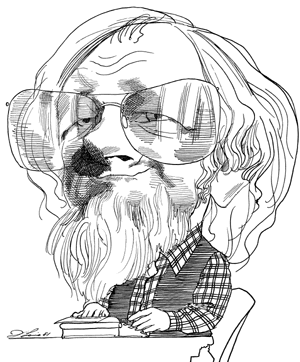
A caricature of Donald Barthelme from the New Yorker


Carl and Edward continually make snap judgement about each other based on superficial qualities. At one point Carl even says that Edward's handwriting theory is "a superficial approach to the problem." Yet Edward doesn't appear to acknowledge Carl's comment because he goes on to elaborate on the details of his theory. The dialogue is more like two monologues where each character occasionally acknowledges the other. It makes sense that the story ends with Carl and Edward slapping each other in the face. These two men don't seem to have any desire to help each other. Violence is the natural conclusion of this conversation. Thankfully they only slap each other instead of something more destructive. There is more to a conversation than being able to say what you think in an interesting way.

Buy Sixty Stories here:
https://amzn.to/2nyyrQG