Showing posts with label meaning. Show all posts

February 2, 2018

Analysis of 'Work' by Denis Johnson

My new year's resolution was to write more but I decided to wait a month before writing. I started in February instead of January.

Today I am writing about Denis Johnson's story 'Work' from Jesus' Son.
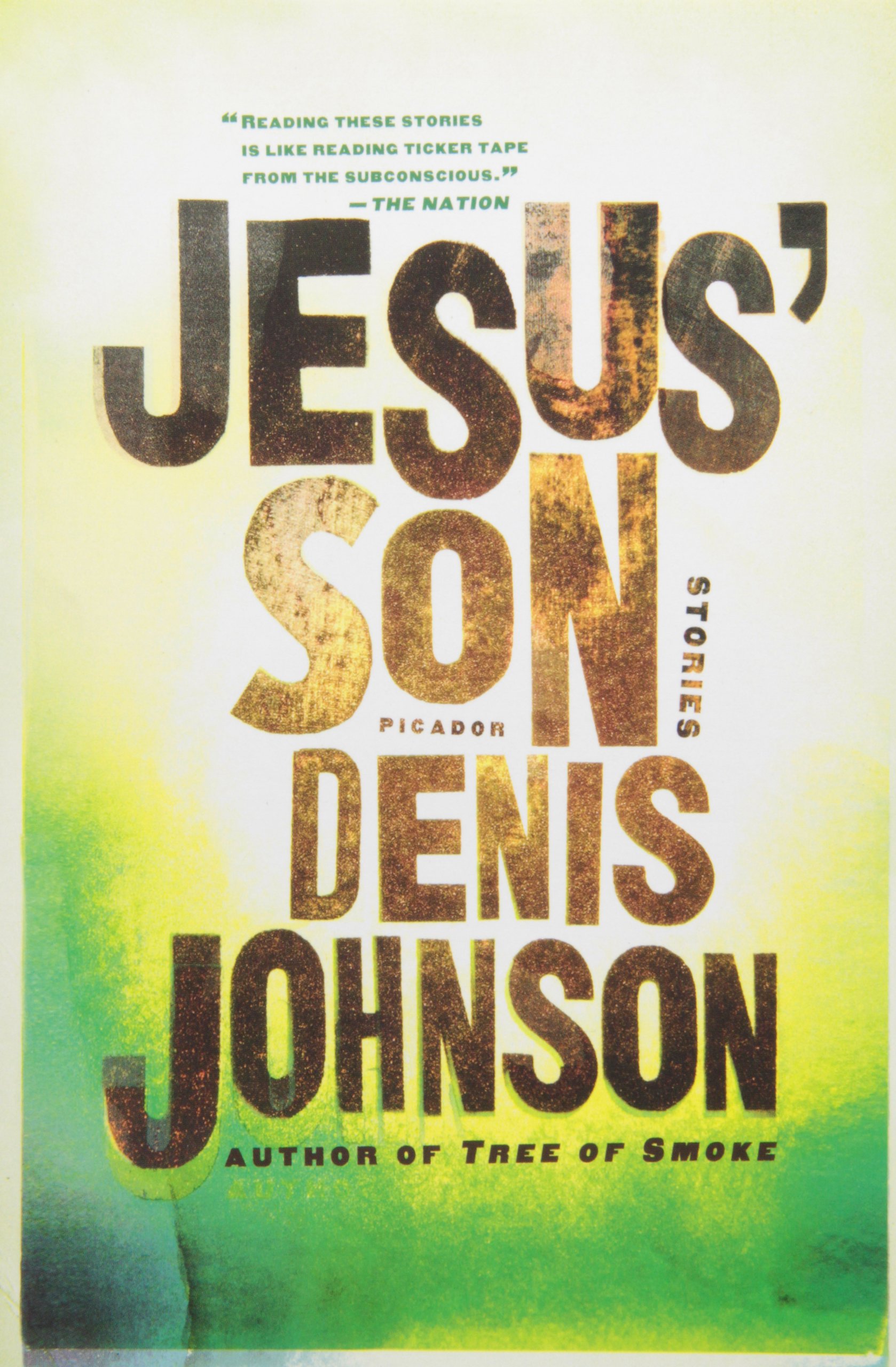
At the beginning of 'Work' the narrator is not in a good place. He has lost his girlfriend after a fight and he is feeling pretty crappy. He goes to a bar called The Vine where he meets an old friend named Wayne. Instead of passing out in a corner as he planned, our narrator accompanies Wayne on a job. The two men drive in a sixty-dollar Chevrolet to a riverbank next to a dozen abandoned houses. The narrator assumes that this is a burglary job but Wayne asserts, "You can't burgulate a forgotten, empty house." The legality of what is taking place is somewhat unclear but we can probably assume that this job is more honest than the work our narrator is used to doing. There are no victims that we can identify except for the house itself which is of course abandoned and forgotten. If the wires in the house were valuable, they would already have been taken.

Later on we learn that the house belonged to Wayne at one point in time. We are left to imagine what must have happened to Wayne to make him desperate enough to tear down the walls of his own house for the copper wires. The narrator vomits because the work is hard. A boat drives by with a naked woman attached by rope to a kite one hundred feet in the air. This woman is Wayne's wife.

The narrator earns $28 for the copper wire he collected. He goes back to The Vine with Wayne who accuses "the biggest, blackest man in Iowa" of cheating at cards. Wayne somehow survives this confrontation without injury. The narrator admits to this being one of the best days of his life. This sentiment felt a bit strange to me at first since this story is not exactly uplifting. The narrator is feeling much better about himself because he is with his buddy Wayne and he feels tired from working. Not to mention the bartender has been generous when pouring drinks.

I'm most impressed by Johnson's writing style in this story. There are many small moments in this story that appeared unimportant at first but seemed more meaningful on a second reading. The main theme that Johnson explores here is the effect of time passing. The narrator is looking into the past as he tells this story with knowledge of what will happen in the future. The Vine will be demolished and the bartender will be beaten by her boyfriend. These are tragic events but the narrator chooses to focus on why this day was meaningful for him. It's important to find moments of happiness when life is tough.

If you found this article helpful, you can support Short Fiction Daily here: 

Buy Me a Coffe

March 22, 2017

"Any Corpse" by Brian Evenson

An unforgettable masterpiece from the best horror writer working today.


As I read through Brian Evenson's latest collection of stories "A Collapse of Horses" certain stories linger with me longer than others. The first story with such an effect is "Black Bark" which you can read my thoughts on here. Another story that is difficult story to forget is "Any Corpse" which I am going to write about now.

"Any Corpse" begins with a shower of raw flesh falling from the sky. We have a female POV observing furnishers, human-like creatures that prod at the raw flesh and attempt to sell it in exchange for beads. We then learn that our female protagonist desires an alive and in tact human body. The premise of this story is bizarre to say the least. We learn that our protagonist is one of many who live in caves and who possess a tablature used to perform a ritual. Later the protagonist asks the furnishers for a corpse. The furnishers respond by asking "what corpse?" to which the protagonist says "any corpse," so long that it is freshly dead. The protagonist fails to understand that "any corpse" includes herself so she is killed by the furnishers. 

After the furnishers kill the protagonist, they expect the protagonists corpse to provide payment. The furnishers would almost be adorable if they weren't murderous humanoid creatures who make a living selling flesh. What's frustrating about this story is that we don't know enough about the furnishers. Why are they called furnishers? What are beads and why do the furnishers desire them? I would very much like to pick Evenson's brain to understand where he got the inspiration for this story.


In the second half of this story, we switch to a male protagonist in the same situation as the first one. He also is searching for a recently deceased body. He meets up with some furnishers and buys the woman's body from the first half. He performs a ritual that revives the corpse and begins asking questions. The corpse is not exactly cooperative. She ends up spitting in the mans face before she dies again for good. 

Later on our male protagonist intends to cook and eat the woman's body. A group of furnishers come to the man's cave. The man asks for another body and ends up making the same mistake as the woman by saying that any corpse will do. The story ends with the furnishers gathered outside of the cave saying "person please out of cave."

While reading Evenson's stories, I often feel just as confused as the characters in said stories. I find myself motivated to read his stories because I want to understand the mysterious events taking place. Unfortunately I am never able to satisfy this urge. When the story ends I am just as clueless as when I started reading. Evenson does not explain why his stories are so weird. Doing so would take away from their power. Evenson's best technique is how he creates such disturbing stories without ever explaining how they work. It is clear that too much explanation would be detrimental to the effect that Evenson hopes to create. The more that we understand what's going, the more comfortable that we feel. Evenson is clearly a literary madman whose goal is to make his readers as confused and as disturbed as possible.

If you found this article helpful, you can support Short Fiction Daily here: 

Buy Me a Coffe

March 7, 2017

Black Bark by Brian Evenson

Summary and Analysis


Brian Evenson's Black Bark is a story you could read a hundred times and you still would not understand what's going on. It's a story with supernatural elements that refuses to explain why they exist. Reading the story is like briefly entering another world that is frightening yet oddly entrancing because you are dying for an explanation as to what is going on.

Black Bark is about two characters named Sugg and Rawley. Both are cowboys riding horses looking for a cabin that may or may not exist. They are apparently running away from something and Sugg has suffered a nasty injury to his leg. Rawley is the protagonist of the story. The reader is meant to experience the story through Rawley's perspective whereas Sugg functions as an antagonist to Rawley. The weird thing about Sugg is that he disappears seemingly out of thin air several times in the story which makes me think that he does not actually exist. Sugg's disappearing act is the only supernatural element in the story. Sugg also sticks his hand into a fire without reacting and tells Rawley a weird story called "Black Bark" about a man who finds a piece of black bark in his pocket that keeps reappearing even after the man takes the bark out of his pocket.

The presence of this story within a story sheds light on the themes of this story. Rawley's main reaction to the story is that of confusion. He wants a deeper explanation of the events that are left out of black bark but Rawley refuses, claiming that he is presenting the story as it is. Sugg's story is the kind of thing you would imagine while you were tripping on acid. This make Rawley's reaction to the story quite understandable.

What I love the most about this story is how crazy and mysterious it is. The setting by itself is intriguing before it introduces the bizarre elements of Sugg's character. It's compelling to watch Rawley struggle to keep himself alive while dealing with whatever the hell is going on with his companion. At the end I was left with the question of whether Sugg was a figment of Rawley's imagination or some higher power was speaking through Sugg. A recurring image in the story is that of the blood angel that appears on Sugg's horse and later on the ground where Sugg lies in a cave. The blood angel is described as vaguely human shaped. Perhaps this is the symbol of whatever high power is controlling the environment in this story. It's incredible what kind of work your mind will do to explain what's going on when not everything is explained.

I believe that is the main goal of Evenson's story: to create a situation where not everything is explained and the events are compelling. This drives the reader to create their own explanations because it is uncomfortable not knowing why these things are happening. It's also a lot easier on Evenson's part to not have to explain the workings behind the strange events in the story. Why should Evenson have to explain why things are the way they are? Is that what a story is supposed to do?

People are raised on stories that mimic reality where all that happens is consistent with the rules of reality. But a story is not reality. A story is a collection of words on a page assembled to create meaning and there are ways to create meaning that exist outside of the normal mode of storytelling. Evenson is one of the best writers at making you feel that disturbed uncanny valley feeling. I greatly enjoyed this story and I look forward to reading and writing about more of Evenson's stories in his new collection. If there is one writer I hope to emulate in my own writing, it is Brian Evenson. I feel his methods for fiction writing are both practical from the perspective of a writer and useful for creating stories that linger with a reader long after the story has been read.

If you found this article helpful, you can support Short Fiction Daily here:

buymeacoffee.com/shortfictiondaily

February 23, 2017

Revelation - Flannery O'Connor

Revelation by Flannery O'Connor is narrated in the third person. The main character in the story is a woman named Mrs. Turpin who firmly believes that people such as herself are superior to other people. If you have read any of Flannery O'Connor's other stories, then you know that this is the type of character who is usually punished in O'Connor's fiction. O'Connor spells out Mrs. Turpin's hypocritical worldview in the following way:

"There was nothing you could tell her about people like them that she didn't already know. And it was not just that they didn't have anything. Because if you gave tehm everything, in two weeks it would all be broke nor filthy or they would have chopped it up for lightwood. She knew all this from her own experience. Help them you must, but help them you couldn't."

Mrs. Turpin is an expert at finding reasons to think that other people are less than her. The Christian sentiment that it is important to help those less fortunate than oneself is undercut by Mrs. Turpin's theory that the less fortunate people of the world are beyond help due to their nature. This idea is fundamental to Mrs. Turpin's worldview.

The most entertaining portion of this story occurs when Mrs. Turpin is attacked by a young lady while sitting in a doctor's waiting room. The lady calls Mrs. Turpin a "wart hog from hell" before she is escorted away by security. This insult shakes Mrs. Turpin down to the core. When she's back at home, it is all she can think about. She is utterly unable to understand how anyone could see her as a "wart hog from hell" because she sees herself as an embodiment of God's chosen people. Later on Mrs. Turpin is washing down the hogs at home when she has a holy hallucination that brings home the main point of the story:

"There were whole companies of white-trash, clean for the first time in their lives, and bands of black niggers in white robes, and battalions of freaks and lunatics shouting and clapping and leaping like frogs. And bringing up the end of the procession was a tribe of people whom she recognized at once as those who like herself and Claud, had always had a little of everything and the God-given wit to use it right."

This vision suggests that all are equal in the eyes of God since all classes of people can be seen walking towards heaven. The fact that Mrs. Turpin sees people like herself at the end of the procession may suggest that she is the last to get in to heaven. It's surprisingly difficult to interpret this final vision of the story because it doesn't cater to the reader's expectations. We expect Mrs. Turpin to finally understand that everyone is equal and that she has lived a life of unjustified superiority. What Mrs. Turpin is unable to understand is why the people whom she perceives as less worthy than herself are just as entitled to heaven.

This ending is too religious for me. I am culturally Jewish but I have never been religious in the sense that I believe in a literal God or afterlife. This is what makes reading O'Connor's stories difficult for me. Its hard to put myself in the shoes of anyone who makes religion the first priority in their life. I don't have anything against religion or religious people but most of the time I don't really see a difference between religion and brainwashing. So when characters in a story have religious visions without the aid of hallucinogenic drugs, I get a little annoyed because it reminds me that what I am reading is ultimately one person's view of how the world works. Stories such as "good country people" and "A Good Man is hard to find" are some of my favorites stories ever, but I can't help but think of Flannery O'Connor as someone who watches Fox News and takes it as fact.

If you want to read someone else's thoughts on "Revelation" check out this post from the Sitting Bee, a site that I hope will one day be talked about in the same conversation as Short Fiction Daily.

As always thank you reading and feel free to leave your thoughts in a comment below. Also check out some of my other posts on Flannery O'Connor stories that I have enjoyed a lot more than this one.

Related Posts:
Buy Here:


February 20, 2017

"The Chameleon" by Chekhov

Summary and Analysis


"The Chamelon" is one of Chekhov's shorter stories at a length of nearly four pages but that doesn't make the story any less compelling. In classic Chekhov fashion, "The Chameleon" expresses a deep truth about human behavior in a detailed setting. The title refers to a police officer named Ochumelov (Russian for wacky) who changes his mind several times about how to act in a situation where he doesn't know all the facts.

Experience Chekhov's brilliant wit and deep insight for yourself—get your copy of The Chameleon and other timeless tales today!

At first Ochumelov is tempted to side with the man whose finger was bitten in part because the situation seems trivial and Ochumelov wants to dispense justice because it seems like a rational decision. When a member of a crowd yells that the dog belongs to a general, Ochumelov in turn assumes that the bitten man deserves all of the blame. Chekhov ends the story by revealing that the dog belongs to a general's brother. This reveal allows Ochumelov to settle on a decision to rescue the dog and punish the injured man.
The moral of this story is fairly easy to deduce. People change their behavior to suit their own needs regardless of how it affects others. When you really think about it, this is a sad lesson to learn. People will behave this way even in situations that with low stakes. The story's tension comes from the mystery of what really happened and the reader's uncertainty as to what will happen to the various characters in the story. Thankfully Chekhov lets us off the hook by allowing the dog to be saved and ending the story before the injured man can be further punished.

I'm curious as to whether Chekhov wrote this story as an allegory. My translation includes asterisks that reveal meanings behind the characters' names but these meanings seem to serve a comical function rather than an ethical one. I would say this is the most comedic Chekhov story I have read to date. Touches like a crowd appearing out of nowhere and Ochumelov's subtle facial expressions make this story feel like a cartoon. Chekhov realizes the humor in his stories even when the subject matter is quite dark.

If you found this article helpful, you can support Short Fiction Daily here: 

Buy Me a Coffe


February 15, 2017

"About Love" by Anton Chekhov

“About Love” by Chekhov begins with three characters discussing the nature of love. One of these characters named Alyohin states that love is a “great mystery” that consists of “questions that have remained unanswered.” Alyohin uses this discussion as an opportunity to tell a story about his experience of love.             

The way the story begins is made by Chekhov to seem arbitrary. The character could have just as easily been discussing the nature of hate rather than love. This is simply how the characters in the story choose to pass the time. I’m uncertain what this adds to the story other than a frame but it’s an interesting technique nonetheless.

Alyohin’s story is about a relationship with another man’s wife named Anna Alexeyevna. Alyohin and Anna are truly in love with each yet they are unable to spend a lot of time together because of Anna’s marriage. Instead of giving in to their love for each other, Anna and Alyohin accept the circumstances that prevent them from being together even though their hearts say otherwise. It’s essentially the story of a forbidden love where both characters never act upon their desires to truly be together.

The story ends with Alyohin finally being able to confess his love to Anna when she is on the verge of being taken away to Crimea. In this moment Alyohin realizes the stupidity of not confessing his love earlier. This final moment speaks to the idea that once love is recognized, it should be acted upon immediately with an utter disregard for rationality.

This concludes Alyohin’s story. The focus then zooms back out to the three men sitting together in the rain. Each man is familiar with Anna so they all feel the sadness of Alyohin’s story. The rain also stops during Alyohin’s story to reveal a fine view of a garden and river. This adds some happiness to a story that is primarily concerned with Alyohin’s unfulfilled love.

The genius of this story is that it exists in a trilogy with two other stories. The proper way to analyze such a story requires a discussion of how the stories relate to each other. I look forward to rereading the other stories in this trilogy and engaging in a discussion of how they relate to each other on this blog.

Love is such a powerful emotion that it is difficult to come away from such an experience not feeling regret. “About Love” advocates behaving irrationally in any situation involving true love. Some attention should be given to the opposite of this argument: that one should also act rationally in a situation involving love. While Alyohin’s story is obviously tragic, his decision to see it as regretful years after it happens is a personal choice. He could just as easily choose to focus on the moments of happiness he experienced with Anna. There is a reason he chose to behave with rationality.

I wonder how one should respond after someone tells the most emotionally devastating story of their life. Perhaps the best response is a silent acknowledgement of the devastation followed by a subtle change in the topic of conversation. 

Also today I read a fascinating post dealing with a connection between Chekhov and George Saunders. Since I am currently reading Chekhov and I have written a fairly popular post on Saunders' story "Puppy" I instantly gobbled up the post with my eyes and brain. I recommend you do the same if you are interested in either author's work. 

If you found this article helpful, you can support Short Fiction Daily here: 

Buy Me a Coffe


February 12, 2017

Vanka by Chekhov - Expressing Humanity through Words on a Page

Today on the blog I am excited to write about Anton Chekhov’s story Vanka. Coming in at five pages, it is incredible how much impact this story has at such a short length. The story is hyper focused on a young boy’s tragic predicament as an apprentice shoemaker under abusive and awful circumstances. The story takes place over one night when the young boy Vanka secretly writes a letter to his grandfather who Vanka remembers in tragic detail.
Perhaps my favorite aspect of Chekhov’s style is his knack for description. It pretty great when you get a sentence like this: “The entire sky is studded with gaily twinkling stars and the Milky Way is as distinctly visible as though it had been washed and rubbed with snow for the holidays.” This sentence is meant to show the clarity and ideal nature of Vanka’s memories of his grandfather. Because Vanka’s life is so awful, it is easy to envision a better life. Vanka is also quite young so he has not had a great deal of formative memories yet. What makes Vanka unable to deal with his current predicament is the fact that he has experienced a better life. The abuse he suffers at the hands of his guardians is utterly abhorrent.
Chekhov is a master of the short story form. As a doctor he mined material for his stories from the many patients he treated. Chekhov’s vocation allowed him to understand the human condition by learning about the lives of many different people. This is why characters in Chekhov’s stories seem so realistic. Every character in Chekhov’s fiction is likely based on a real-life person. This allows Chekhov’s work to serve an important function – it provides readers a mirror with which to base their own lives upon. Chekhov’s work is universal. At some level, all of his characters are dealing with a problem that has been experienced by people all over the world. Vanka’s experience represents the experiences of suffering children through history.
All of Vanka’s attributes are universal. The way looks at the door before writing, how he sighs after remembering a happy moment with his grandfather, the fact that he lacks the knowledge of how to properly address his oh so important letter. These qualities speak so much about this character and his experiences in the world. What makes this story so tragic is the humanity that is expressed through words on a page. Chekhov is arguably the best at pulling this off.

BUY HERE:
https://amzn.to/2nBSIF3

February 9, 2017

Offloading for Mrs. Schwartz

Today I am writing about one of George Saunders' lesser known stories "Offloading for Mrs. Schwartz" which is the fifth story in the collection CivilWarLand in Bad Decline. Like most of the stories in this collection, this story focuses on someone who hates their job working a strange company. Saunders uses this premise so much because its easy for people reading to relate to it since pretty much everyone has worked a job they didn't like.

In this case the strange company's business is interactive personal holography. People pay to enter a virtual reality in a process that involves treadmills and headsets. The specifics of how this futuristic process works are not explained in detail because that is not what Saunders thinks is important. Saunders chooses to focus instead on the grieving process of the main character who lost his wife. The strange futuristic setting is simply an interesting backdrop that doesn't really factor into the story's core.

The narrator volunteers to help a dying old lady named Mrs. Schwartz who requires a live-in caretaker. The narrator feels it is his responsibility to provide this service for Mrs. Schwartz but unfortunately his virtual reality business doesn't provide him with the necessary money. Towards the end of the story the narrator is held at knife point by a hapless intruder. The narrator knocks the intruder unconscious and accidentally offloads his memories onto a hard drive. When the intruder wakes up he appears happier without the many painful memories he once possessed. This gives the narrator the idea to sell the intruder's memories as virtual experiences for customers and this idea is profitable enough that the narrator can afford to hire a caretaker for Mrs. Schwartz. This idea eventually forces the narrator to offload all of his own memories. The narrator leaves a final note telling himself to take care of Mrs. Schwartz with money that will arrive in the mail.

This is perhaps the least satisfying ending of any George Saunders story I have read. The ending is somewhat tragic because the narrator has sacrificed all of his memories but it also seems happy since the narrator will have a much better life without any memories. The central question of this story is how does memory help us when there are so many negative events to ruminate on. Judging by this story, Saunders seems to believe that memory serves a harmful purpose more often than not and most lives would be better lived if we could start over with a blank mental slate. This is the lesson Saunders hopes to teach us.

If you found this article helpful, you can support Short Fiction Daily here: 

Buy Me a Coffe

February 7, 2017

The 400-Pound CEO

The 400-pound CEO is one of my favorite stories from George Saunders' collection CivilWarLand in Bad Decline. Like other stories by Saunders, the 400-pound CEO focuses on a character negative experience in a bizarre workplace. In this case the character is Jeffrey who works at Humane Raccoon Alternatives, a corporation that claims to release troublesome raccoons into the wild but actually kills them.

Jeffrey is frustrated at his lack of love life and his co-workers constantly make fun of him for being so overweight. Jeffrey has feelings for his coworker Freeda who is repulsed by Jeffrey but she accepts Jeffrey's invitation to dinner. Jeffrey and Freeda go out to Ace's Volcano Island, a Hawaiian themed restaurant run by an aging beatnik with Tourette's. It turns out that Freeda only went out with Jeffrey because their coworker Tim agreed to pay Freeda's phone bill. In response to this humiliation, Jeffrey goes on vacation for a week and does nothing but play a game called Oil Can Man. When Jeffrey returns to work, his life continues to consist of boring work, self-loathing and humiliating jokes about his weight.

While attempting to stop his evil boss Tim from attacking an animal rights girl with a camcorder, Jeffrey inadvertently kills him. In the moments after this event, Jeffrey realizes that his biggest concern in life is not lofty ideals but himself. Jeffrey then forges a letter in which Tim says that he is moving to Mexico and Jeffrey is the new CEO. Jeffrey's reign as the CEO is short-lived when his co-worker Claude discover's Tim's dead body. Jeffrey is arrested and sentenced to fifty years in prison where he continues to be humiliated but Jeffrey somehow refuses to give up his dignity.


One of my favorite things about Saunders' stories is how they combine funny and dark elements. It's a testament to Saunders' ability as a writer that this story can inspire such different reactions at different points. Reading about Jeffrey's struggles will most likely make you feel grateful for how much better your life is and that is quite the feat on Saunders part. By providing a glimpse into one of the saddest and most unfortunate people on Earth, Saunders, I believe, wants to make people feel better about their own lives.

At the end of this story, Jeffrey entertains the possibility that his life could restart if a benevolent higher power were to assume responsibility for his tragic life. This is the darkest moment of the story since we know that Jeffrey's life will never change unless he himself takes action. This moment speaks to Jeffrey's persistent ability to think that his life will get better. This ability is what enables Jeffrey to continue working even though his job sucks and his coworkers treat him like human garbage. The problem is that Jeffrey's life at the end of the story story is awful since he is serving a 50 year sentence for murdering Tim. When your life is really tedious and unfulfilling, you should maybe try something other than hoping that a higher power will fix your life.

If you found this article helpful, you can support Short Fiction Daily here: 

Buy Me a Coffe


November 28, 2016

Car Crash while Hitchhiking Summary and Analysis

Summary


The story begins with the narrator waking up in a delirious state. The narrator has done a lot of drugs with a salesman, a Cherokee Indian and a college student. The narrator is in pain but he also seems strangely coherent. He states that he can sense things before they happen.

The narrator is picked up by a family in an Oldsmobile. The narrator knows that there will be a car crash but he chooses to say nothing and goes to sleep. The Oldsmobile crashes into another car and the narrator takes the baby into the night. Walking by the other car, the narrator notices a person lying on the ground. The narrator can tell that this person will soon die and later refers to him as the "dying man". The narrator is taken to a hospital where he sees the wife of the dying man. The wife shrieks like an eagle and the narrator states that hearing the shriek actually felt wonderful. The narrator then describes lying on a hospital bed and being given vitamins by a nurse. Then he describes an outdoor setting while directly addressing the readers of the story.

Analysis


In "Car Crash while Hitchhiking" Denis Johnson introduces us to the narrator that will remain throughout all of the stories in the book Jesus' Son. We do not learn the narrator's name until later in the book. It's a mysterious story without barely any explanation. The narrator's tone is similar to that of a journalist attempting to describe something as clearly as possible. The problem is that the narrator is high on several kinds of drugs which threatens the reliability of his story. The ending of the story presents the possibility that the entire story is just a hallucination occurring in the narrator's mind. Although we have no reason to suspect that the narrator is a bad person, his actions in the story make him seem self-interested. 

Another reasons why I believe this story occurs in the narrator's head is that he claims to possess the ability to see the future. I find it hard to understand why Johnson chose to include this element in the story. It does not serve a purpose for the story, seeing how the narrator does not act on his premonitions. The narrator is either too stoned or too tired to share his knowledge of the future. The only times the narrator expresses any feelings on the events taking place are when he sees the dying man on the road and when he hears the wife of the dying man shriek in the hospital. The narrator does not express grief during these moments but he does express feelings of awe.

"Car Crash while Hitchhiking" is an aberration of normal storytelling. There is a climactic event some exposition but none of the characters possess an arc and the story might be merely a figment of the narrator's imagination. There is more work than usual on the reader's end to find meaning because the story's purpose is unclear. 

If you found this article helpful, you can support Short Fiction Daily here: 

Buy Me a Coffe

November 16, 2016

"Thief" by Jess Walter: The Senselessness of Guilt

In the stories I have read, Jess Walter tends to focus on blue-collar people or worse. "Thief" is no different. The story is about a family of five. Each family member's persona, except for the mother, is described in detail because each is a suspect. The father Wayne is tearing himself apart trying to understand why one of his children would steal loose change from the family vacation fund. At first I thought the father was the thief because he prowls around the house at night examining his children, however the father is simply a workaholic and possibly a drunk who thinks a lot about his friend Ken's affair with a woman named Donna. Caring about the Father's dilemma is difficult because the stakes of the story don't seem very high. Who cares about a few cents here and there.

Wayne has fond memories of the vacations his family took when he was a child. He smiles while telling his wife about a trip to Yellowstone. The vacation fund is a tradition that started with Wayne's father. It takes two years before the family has enough money to take a vacation. Early on Wayne tells his wife why the missing money is a problem: "You want one of your kids stealing from their own goddamn family? You want your kids to be like this?" On his day off Wayne pretends to leave for work and instead hides in the closet, hoping to catch the thief in the act. Wayne hear the thief take money from the jar but he doesn't have the nerve to confront them. When the thief has left the room, Wayne can only reach for a beer. And here is where the story takes a turn. The narrator several numerical facts about the family in quick succession: "The house cost $44,000. The interest rate is 13 percent. The father works rotating shifts at a dying aluminum plant - day, swing, graveyard - for $9.45 an hour, and he comes home so tired, so greasy, so black with soot and sweat that he unrecognizable, and yet, every day he gets up to do it again." The ending completely changes how we view the rest of the story. Wayne becomes a messiah-like figure who dies everyday for his family's sins. You understand the father's struggle on a deeper level. Life is extremely difficult and Wayne struggles everyday to make ends meet with only the faint hope of a vacation every two years to motivate him. Sometimes the people we love don't realize the true consequences of their actions. The thief "burns with shame" but shame is not enough to keep the thief from stealing. What's on the surface is rarely enough to fully understand something. The truth is always far more complicated than appearances suggest. Few writers capture this idea better than Jess Walter.

Buy We Live in Water here:
https://amzn.to/2MMtajd

November 15, 2016

"Anything Helps" by Jess Walter

"Anything Helps" is narrated in the third person and the narrator has direct access to the main character's memories and thoughts. This main character, named Bit, is an experienced homeless vagrant who routinely panhandles for money with a cardboard sign reading "anything helps".

The story is intended to be a realistic depiction of Bit's struggle. I doubt that this is a true story but I can imagine many people like Bit who exist in reality. Sometimes fiction can be more "true" than reality. While the teller's motivation is never explicitly stated, I assume that the story exists to shine a light on a marginalized person. This is an honorable intention and it can sometimes backfire when the writer does not have good knowledge of the marginalized person's experiences. Fortunately Jess Walter seems to have a good idea of what a homeless person's life is like. That is what makes this story work.

The story is paced deliberately with very clear scenes that lead to a climax. It's easy to track Bit as he moves from point A to point B. It's the story of someone wanting to do something good for a family member but failing because of real-life circumstances. Bit buys a Harry Potter book for his son Nate but he does not realize that Nate's foster parents prohibit their children from reading Harry Potter. It's the thought that counts and Nate is mature enough to reasonably refuse his father's gift. At this point in the story, we understand Bit's pathos. All he wants is to give his son something so he can feel like good father he never was. It's too late and Nate is clearly better off living with Foster parents, evidenced by his bike and braces, which he likely would not have if he still lived with Bit.

The story is circular in that it ends exactly where it began with Bit panhandling at by the freeway. Bit's mind is on the Harry Potter book and its meaning to him as a reminder of his experiences with Nate. This is an ending that leaves you wanting more, a perfect opening story. There is no closure. We don't know what will happen to Bit. We only know that Bit thinks he would be better off dead like his wife Julie. Perhaps the ending is somewhat hopeful because it depicts Bit finding some solace in one of his darkest moments. I choose to think of the ending in this way.

Other writers on the internet have done some really great writing on this story. I recommend this piece from greatwriterssteal.com.

If you found this article helpful, you can support Short Fiction Daily here: 

Buy Me a Coffe


Related Posts:


November 8, 2016

Lydia Davis - The Professor

Lydia Davis. The Professor. Analysis. Summary. If you came looking for anything related to these words, then you came to the right place. I have been really digging Lydia Davis recently. Been reading her story collections and some scholarly articles on her work. I started with Break it Down and I'm currently reading Almost no Memory, which contains the story I am writing about today.

Lydia Davis is more philosophically concerned than the average writer. Her stories don't really possess narrative as you would traditionally think of narrative. Instead her stories exist in the minds of her characters. There is some action but it clearly takes place in the form of memory, which is less exciting than action that takes place in reality, but I don't really mind. It's all the same to me and I actually enjoy many elements of Davis's writing style. She's a good writer and more importantly, she's a writer who does her own thing regardless of what anyone else thinks. The following is a summary and analysis of Davis's story "The Professor".

Summary

The narrator tells us that a few years ago she fantasized about marrying a cowboy. She admits that she lives on the East Coast and she is currently married to a someone who is not a cowboy. The idea of marrying a cowboy is appealing because it would stop the narrator from thinking so much. Feel free to take offense if you're a cowboy. The narrator says she got this idea from watching a movie with a friend which causes her to envision herself as a tough businesswoman who owns a motel. Around this time the narrator also met a student who was the closest thing to a cowboy that the narrator would ever find. She asks this guy out on a date and he says yes. On the date the man reveals a gun in his car and says that dangerous men are looking for him. The date goes well but the man says that he can never see the narrator again, which she understands.

The story ends with the narrator admitting that she thinks about marrying a cowboy much less often than she used to. She is so used to her husband that if she married a cowboy, it would essentially be a threesome.

Analysis

"The Professor" is classic Lydia Davis in that it presents a problem without an answer. The narrator is clearly longing for a great change. This longing takes the form of a cowboy fantasy. The fantasy merely occupies the narrator's thoughts while she does her job and lives the life that developed naturally for her.

It's interesting that the problem is never resolved. The narrator admits that she still thinks about marrying a cowboy today. This is par for the course with Davis's fiction. In a different story the narrator would end up actually meeting and marrying someone who fits her view of a cowboy and they would go off and live an idealized lifestyle. This is the traditional narratives of many stories in the romance genre. In Davis's world, she merely goes out on one date with someone who somewhat resembles a cowboy and that's that. It's a truncated and more realistic version of that much longer traditional narrative. Davis shows us that real life is often much different than what we read in fiction. This by itself is an old and cliche idea. Davis's stories may be fun to read although they seem to focus on the same ideological territory too frequently.

I am still pretty deep into the Lydia Davis rabbit hole so expect more posts on her work in the future. Thanks for reading.

Buy The Collected Stories of Lydia Davis here:
https://amzn.to/2B916W1


October 25, 2016

Lydia Davis - "Five Signs of Disturbance"

"Five Signs of Disturbance is the final "story" in Davis's collection "Break it Down". Similar to other stories in the collection, there is an unnamed narrator and the only character is a "she". Here the "she" is another eccentric type who is easily entranced by inanimate objects. The following is my commentary on Davis's "Five Signs of Disturbance".

I have come to understand that Davis's stories rarely possess a plot. The focus, more often than not, is on character psychology. The narrator usually has unfettered access to characters' minds and uses this power without limit. Language is another central concern of Davis. She likes experimenting with language, testing the meanings of words and creating humorous moments. While I believe it is still somewhat valuable, focusing on narrative in Davis's works misses the point that Davis is more concerned with other things.

In "Five Signs of Disturbance", the main character "she" is sensitive and analytical. Because she is isolated, every little stimuli has a disproportionate effect on her. For example ads involving old people or children tend to make her cry. She is unable to compartmentalize. However I am going to assume that "she" is a very intelligent person or at least very self-aware. At one point the narrator even says that her smartness has counted less and less over the years. This thought belongs to the character and is presented as an objective thought.

There are images in the story alternating with the internal and external descriptions of the character. These images are sometimes separate from the character's experience and sometimes they are part of it. The title of the story refers to five specific stimuli that "she" identifies as particularly disturbing. This speaks to the character's analytical personality. With all the sources of meaning in her life, she still feels compelled to mark some as uniquely disturbing. Perhaps this character was an accountant or a lawyer in a previous life.

If I were to associate this story with one specific idea, I would choose the human tendency to create meaning everywhere. It's human nature to attach meaning to objects based on all sorts of criteria. Often this behavior is more problematic than useful. The characters in Davis's stories can attest to this. The more I read Davis, the more I think of her as a philosopher parading as a fiction writer.

Check out my other posts on the stories "Therapy" and "Break it Down". I am too far down the Lydia Davis rabbit hole to spot now so expect posts on her later works in the future. 

June 14, 2016

A Hunger Artist

Kafka's "A Hunger Artist" is about a performer who fasts before an audience. This performer is incredibly committed to his art, but he is surrounded by people that do not understand it. The artist lives in a small cage with only a clock and a signpost showing how many days he has been fasting. In the beginning of the story, the hunger artist is a popular attraction in his local community. People are impressed and mystified by the hunger artist's capacity to perform a seemingly impossible task, yet the hunger artist feels that his task is quite easy. He laments the 40-day limit imposed on his fast by his impresario and also the ceremony after he completes his 40 days. The hunger artist feels that this 40 day limit essentially cheats him out of his own fame.

At the very beginning of "A Hunger Artist", Kafka tells us "During these last decades, the interest in professional fasting has markedly diminished." From this we can infer that "professional fasting" is a dying profession. Yet the hunger artist is truly connected with his profession. He has reached a stage of being totally consumed by his art. In fact, the hunger artist considers fasting to be the primary element of his identity. Fasting is everything for the hunger artist, like writing was to Kafka. Once Kafka realized that writing was his sole purpose for living, he completely abandoned the rest of his usual activities. According to Kafka's diaries, this was necessary because what little energy he could spend needed to be spent on writing.

The later pages of "A hunger Artist" depict the performer moving to a crowded circus environment. The hunger artist's enclosure is placed close to the main tent where the most exciting circus spectacles take place. This is both a blessing and a curse for the hunger artist. A lot of people pass by his tent but barely any of them are interested in his performance. Whatever spectacles await inside the main tent are much more appealing to the circus patrons. While he may be able to fast without a time limit, his talents are wasted because no one is interested in him anymore.

Eventually the hunger artist is replaced by a young panther. It's incredible how quickly the panther consumes the space of the hunger artist and begins garnering attention. Kafka's depiction of the panther is a stark contrast to the hunger artist: "the joy of life streamed with such ardent passion from his throat that for the onlookers it was not easy to stand the shock of it. But they braced themselves, crowded round the cage, and did not want to ever move away." The panther represents a 360 degree turnaround from the hunger artist. The panther needs no explanation to be entertaining. It's a freaking panther for god's sake. Yet the panther is lauded for its ability to draw a crowd, something the hunger artist failed to accomplish in his later years. One could also argue that the hunger artist and the panther are more similar than you might think, since both creatures performances obscure a more complex reality.


Buy Franz Kafka: The Collected Stories here:

February 25, 2016

Al Roosten

Getting back to some George Saunders stories here.

Summary

This story feels like a roller coaster of contradictory thoughts. The constant banter of Roosten's inner thoughts makes it difficult to follow the story, but I am going to give it a shot. Roosten is the owner of a store called Bygone Daze, a shop that sells vintage collectibles. Roosten is volunterring in a strange charity event called LaffKidsOffCrack. Along with Larry Donfrey, Roosten is going to be auctioned off to the highest bidder. Roosten and Donfrey both saunter down a runway, presumably to increase their chances of being bid on. After Roosten does his runway walk, he walks to the "cardboard jail" where he has "his own barred window". Once this bizarre spectacle is over, Roosten retires to the changing area where, in a fit of jealous anger, he kicks Donfrey's keys and wallet underneath a "stack of risers."
Roosten drives "through the town where he'd lived his whole life" while his mom talks to him from heaven. Roosten feels guilty about Donfrey's keys so he envisions an alternate timeline where he goes back to the event and helps Donfrey find his keys and wallet. He even envisions himself eating dinner with the entire Donfrey clan. None of this is actually happening.

Roosten reaches his shop across the street from a junkyard where "hoboes hung out." Roosten imagines himself beating up a homeless man with "ghoulish" teeth and red eyes. Roosten frames this as a valuable lesson for the homeless man. Instead Roosten and the homeless man exchange weak smiles and go on their ways.

Analysis


The narrator of this story cycles between a third person detached POV and direct access to Al Roosten's real thoughts. I would argue that the focus of the story is the distinct voice representing Roosten's inner thoughts. The voice is contradictory. It goes from one thought to the exact opposite immediately. I would characterize it as neurotic and possibly unstable. Roosten typically envisions himself performing outrageous feats but his real-life behaviour is contained and measured. The frankness of the third-person narrator brings the reader closer to Roosten, making him a more sympathetic character. There's a tension between Saunders's view of Roosten as disgusting and the narrator's desire to make Roosten seem pitiful and sweetly stupid.

Donfrey acts as an interesting foil to Roosten. Donfrey is much more successful and handsome than Roosten and Roosten even admits that Donfrey is a "good guy". The narrator remarks that Donfrey and Roosten are "twin pillars of the local business community," yet appears to have a much better life. Donfrey is simply and upgraded version of Roosten in every way.

The voice of Roosten's mother is an interesting aspect of this story. It's telling that the dead mother is still speaking so coherently and frequently in Roosten's head. We can add hearing voices to the list of Roosten's issues. The mother is giving and realistic. She tells Roosten that his "moral courage" is his most important trait.

I am surprised at how much there is to examine in this story. On the first reading, it was hard to track the story's plot while following the crazy statements of Roosten's inner thoughts. Once I became comfortable with this structure, it became easier to find the meaning in this story. It will be fun to revisit this story and find even more insane ways that Saunders creates meaning. There's a lot to chew on in Roosten's thoughts and in the story's unique setting. 

If you found this article helpful, you can support Short Fiction Daily here: 

Buy Me a Coffe


June 27, 2013

"Tell The Women We're Going"

Another Carver story that left me speechless, "Tell The Women We're Going" deals with the relationship between two friends named Bill and Jerry. Bill and Jerry are inseparable growing up until college when Jerry drops out and gets married to a woman named Carol. Bill becomes a third wheel and whenever he goes to hang out with Jerry, he feels awkward because Jerry and Carol will start making out in front of him. Bill eventually gets married to a woman named Linda. The two couples then start hanging out regularly.

Carver reveals that Jerry and Carol have had two kids and Carol is pregnant with a third. Life has sped up quickly for Jerry who has found himself tied down in his early twenties. Meanwhile Bill seems to have his shit together compared to Jerry. Bill marries later and finishes college. One afternoon Bill and Jerry are relaxing drinking beer when they decide to go for a drive. Each has about five beers playing pool. At this point I realized that both Bill and Jerry are unlikable characters. They're on their way back home when they spot two women on bicycles and Jerry tells Bill to turn around the car so they can talk to them. Bill starts up some small talk but the girls don't really seem interested in what Bill has to offer. They follow the girls who ditch their bikes and start walking on trail. Bill and Jerry follow. Bill doesn't seem interested in following but Jerry urges him to keep up.

During this part of the story, there's a sense that something bad is about to happen. That moment happens when Jerry uses a rock to kill both of the women.    Bill says that he only wanted to have sex and would have been fine if that didn't happen but he's still an accessory to murder. The murder is a gut punch to the reader because nothing in the story suggests that Jerry is a murderer. Jerry's actions are irrational so one can assume that he's a psychopath. This story is appealing in its simplicity and bizarre turn of events. It sticks out more than Carver's other stories because of its violent ending.

If you found this article helpful, you can support Short Fiction Daily here: 

Buy Me a Coffe


June 25, 2013

Why Don't You Dance?

I recently checked out a collection of stories by Raymond Carver from the library. Carver is one of those writers who was required reading for me in high school but I has not re-entered my life until now. He has a distinct style using few words and creating characters that reflect his own life experiences. The characters i've encountered so far all seem peculiar.

In "Why Don't You Dance?" the story begins from a man's perspective as he sits drinking whiskey and staring at the furniture in his front yard. For whatever reason, the man has set up his furniture outdoors in a public setting and has even connected the tv to an electricity source indoors. We get very little information about who this man is or why he has decided to do this with his furniture. One can make assumptions about this man based on his actions but nothing definitive can be known about his life based on the story.

A boy and a girl stumble upon this man's furniture and are open-minded enough to interact with another person's belongings because they think it might be a yard sale. I was curious about the ages of the boy and girl because they are old enough to be furnishing an apartment but are still referred to as "the boy" and "the girl" for most of the story.

When the man shows up and finds the girl lying on his bed, no one seems surprised and the boy, girl, and man start haggling with each other. The story seems unrealistic due to a lack of emotion present in the characters. The strange  interactions between the characters made me even more curious about the setting and context of the story. Where do these characters live? Why do they seem so comfortable with each other? These are just a couple of my questions regarding this story.

After the boy and girl have purchased what they want, the man decides that its time for a drink. Once again, the boy and girl do not question what's happening and drink whiskey in this stranger's front yard. When everyone is adequately hammered, the boy and girl begin dancing in the driveway. Eventually the boy stumbles away and is replaced by the man, now dancing with the girl who is likely much younger than him. While this event doesn't seem inappropriate, the girl rests her head on the man's shoulder and the act of dancing itself is an intimate experience. The story ends on a strange note. Later on, the girl describes this experience to everyone she can. She wants to talk about it and feels like she her experience with the man was extraordinary in some way, yet she can't put her finger on what makes it that way. The ending makes me think that something must have happened between the man and the woman in the story that wasn't revealed by the narrator.

This is only one of several Carver stories I have read so far and will post another recap of my favorite story in the collection. Despite the weirdness of "Why Don't You Dance?" I recommend it mainly because of Carver's reputation as a master of short fiction. The story can be found here: http://typistspen.com/why-dont-you-dance-raymond-carver/

If you have time, read it and let me know what you think of it. I'd love to hear some other reactions to this story possibly as a comment to this post. See you tomorrow.

Buy Here:
https://amzn.to/2KStWK5