Showing posts with label the. Show all posts

June 15, 2016

The Hunter Gracchus

Kafka begins "The Hunter Gracchus" with a pedestrian description of different villagers in their daily routines. Two men carrying the dead Hunter Gracchus enter a house where they meet a man in a top hat. This man isolates himself in a room with the dead hunter who suddenly wakes up and begins a conversation with the man who is revealed to be the Burgomaster of Riva.

The Huntsman reveals that he died several years ago falling from a cliff in the Black Forest but he claims that "my Death Ship lost its way". So the Huntsman now remains on Earth, always in motion, unable to find his destination. The Huntsman claims that his situation is unique and unmanageable. No matter where he goes, no one wants to help him because no one knows where to find him, thus the Huntsman travels the Earth aimlessly

The Huntsman Gracchus is a mysterious character. There is very little to guide the reader in how to interpret the Huntsman's bizarre situation. Kafka simply presents us with the facts and leaves us to draw our own tenuous conclusions. It seems that the Huntsman's situation is an anomaly, yet his situation is similar to the village people at the beginning of the story.

No one really has any idea what happens in the afterlife. Gracchus's story serves to remind people of just how little they truly know. While religion can provide an illusion of knowledge, it cannot even begin to grasp the true nature of death. Not even Gracchus nor his boat captain have any clue as to what sort of forces are at play. In any case, "The Huntsman Gracchus" is a story that presents more questions than answers. Gracchus's fate bears no connection to how he lived his life, so what determines what eventually happens to humans after they die?

I don't know and neither does Kafka. The point seems to be whatever happens afterlife is unknowable so it is foolish to pretend otherwise. If you have any stories that you would like me to read and write about, just let me know in a comment.

Buy Franz Kafka: The Complete Stories here:
https://amzn.to/2KN77qR

September 10, 2015

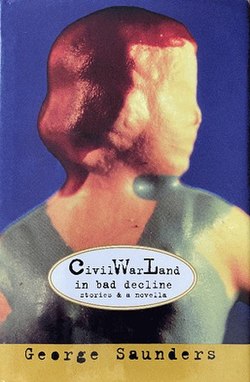
George Saunders on Process

In a piece titled “On Process”, George Saunders discusses several interesting ideas about fiction. Saunders starts his process by looking at a single sentence and repeating it until a next step appears. Ideally the next step should come should come unwilled. Saunders hopes that the forward movement of his stories feels natural, instantaneous, and unstoppable. However the mechanism of this process is mysterious. Where do narrative impulses come from and can their quality improve? Saunders cares deeply about the quality of his writing, as most fiction writers do, so it behooves him to understand process as much as possible.

An enabling characteristic of Saunders’ mentality is zero investment in the writing. Saunders wants to feels like he is reading a piece for the first time. Saunders cares not about the piece’s success or quality and focuses only on the story’s natural energy divorced from any thematic aspirations. Saunders wants to keep it interesting and believes that the most interesting connections come from the mind of someone with zero previous experience with a given story.

The other critical idea for Saunders is iteration, or repeating the process over and over until a story becomes its own unique thing. On a given day, Saunders averages about three readings, each followed by integrating changes into the text and generating a new printout. Yet Saunders runs into trouble when he says, “the result will be more like you, the writer, than even you, the ‘person’ is.” It’s difficult to pinpoint what Saunders means by this.  He obviously supports the iterative process, but how does making something more like the writer than the person improve quality? To clarify, I think Saunders wants to keep his “real self” out of his writing because deep down, he considers himself a boring person.

So what is the point of fiction? Why go through the trouble of Saunders’ intensive writing process? Well have no fear because Saunders is here to give us the answer:

“Most of us, at a certain point in our lives, come to understand that we are here to grow. To grow in love, patience, gentleness; to become more able to deal with the harshness and victories of life with aplomb and generosity. But how to do it? Art can be a way of training ourselves in these virtues – not in a holy or precious or dogmatic way, but in the same way that a crazy night on the town, or a catastrophic love affair, or a close brush with death, can train us. Reality says: here I am. Likewise in a story, the truth says: here I am, albeit in a strange garb.

Here is what I think Saunders is getting at. To grow in virtue, people need “reality” checks. Normally people get this from formative experiences but fiction can also provide it. Fiction should mirror reality. The work should be an accurate encapsulation of a realistic situation. If something is an accurate depiction of reality, it is more likely to resonate


Ok, that is enough for now. I want to stop before I jump to any more conclusions about what George Saunders may or may not be trying to say. You can find the piece on the Kenyon Review website.

June 13, 2014

Flannery O'Connor - The Turkey

Flannery O'conner's story "The Turkey" focuses on an eleven-year-old boy named Ruller who chases down a wounded turkey. O'connor provides glimpses into Ruller's imagination throughout the story and this is what makes the story interesting. Ruller is an unusual boy who spends a lot of time by himself. I can relate to Ruller's tendency to imagine as a way to make life more compelling. While Ruller's father thinks that playing alone is unusual behavior for a young boy, one can argue that this is perfectly normal for a child with an overactive imagination.
The story also focuses on Ruller's concept of God. Ruller attributes the cause of events in his life to decisions that God makes. Ruller believes that God gives him the turkey so he can bring it home and impress his family. Language regarding God's influence on Ruller's life is a big part of the story's humor. O'connor seems to be commenting on the tendency of humans to believe that God personally controls the outcomes of everyday life.
Ruller's main shortcoming is his belief that God is responsible for how his life works. This allows Ruller to avoid responsibility for his own actions. Ruller has bizarre sense of right and wrong. After he captures the turkey and wins the admiration of people in his town, he feels a need to give money to a beggar. Giving money to the poor is Ruller's way of thanking God for the turkey. Unfortunately, in the same way that Ruller tracks down the turkey, a gang of boys trakc down Ruller and steal his turkey. After this happens, it's natural to assume how Ruller feels about this. It's a tragic end for Ruller that points out the flaw in believing that God is personally invested in trivial human events. The story is an interesting exploration of childhood imagination and a brilliant snapshot of a single meaningful event in the life of a young boy.


If you found this article helpful, you can support Short Fiction Daily here: 

Buy Me a Coffe


April 10, 2014

George Saunders - The Wavemaker Falters


The narrator of Saunders' "The Wavemaker Falters" works at an amusement park where he operates the wavemaker, a machine titled for its function. It's a strange setting to say the least and the narrator's description of his surroundings makes this clear: "The Night crew's hard at work applying a range of commercial chemicals and cleaning hair balls from the filter. Some exiting guests are brawling in the traffic jam on the access road. Through a federal program we offer discount coupons to the needy, so sometimes our clientele is borderline." Saunders' unique voice is present throughout the story. He has a way of describing things that feels playful but also quite discerning. The narrator sees a great deal in a relatively short period of time, and most of what he sees is generally unpleasant. What kind of place has chemicals, hairballs, and people fighting in the same location? It's hard not to laugh at Saunders' humorously depressing descriptions of setting.
The defining moment of the narrator's life is when a young boy dies in the wavemaker while the narrator stares at members of an all-girl's glee club; a traumatic moment that causes much guilt for the narrator. Guilt is definitely a key word in the story. Much of the narrator's frustration derives from the inadequacy he feels compared to his boss Leon who might be even stranger than the narrator: "On the wall of his office he's got a picture of himself Jell-O-wrestling a traveling celebrity Jell-O-wrestler. That's pure Leon." This about sums up the eccentricity of the story. Our first glimpse into Leon's character is through the image of him Jello-O-wrestling (whatever that looks like). The narrator feels that this picture represents Leon perfectly, but how can this sort of image convey Leon's personality? Is he an the ostentatious type who enjoys showing off his crazy adventures? I choose to believe that the narrator is strange for thinking he understands Leon because of this picture.
A typical Jell-O mold.
Because of his guilt, the narrator visits a therapist who makes him repeat the phrase: "A boy is dead because of me" got half an hour for fifty dollars. The narrator needs to quantify this experience, showing possible resentment for his therapist's motivations. The narrator is visited most nights by the ghost of the boy he killed who brings interesting conversation topics with him: "One night he showed up swearing in Latin. Another time with a wild story about an ancient African culture that used radio waves to relay tribal myths." How about that? The complete ridiculousness of the situation is made even more bizarre by Saunders inclusion of these details. Saunders heaps weirdness onto more weirdness, creating a stew of bizarre scenarios. Thankfully these scenes combine to form a coherent narrative.
At the core the story is quite tragic as the narrator's life seems be spiraling downward.  Towards the end the narrator discovers his wife's affair with Leon and can't muster up the courage to confront them in the act. When he brings up the topic with his wife at home, she doesn't even deny the fact. She tells the narrator bluntly that the affair is going to continue. The narrator hits rock bottom when the father of the child he killed calls to say that he's going to kill him: "I don't hate you, he says, But I can't have you living on the earth while my son isn't." Curiously, at the exact moment of his impending death, the child's father disappears out the front door. The narrator leaves his house and wanders to a graveyard where he reflects on past events. Fully aware that his life is going nowhere, the narrator says, "this is as low as I go." A somewhat hopeful ending for a story dominated by hilariously tragic circumstances. Frankly, I can't imagine how this narrator will discover any satisfaction in his life, yet this abrupt shift in tone leaves a sense that things can only get better.


If you found this article helpful, you can support Short Fiction Daily here: 

Buy Me a Coffe


July 20, 2013

"The Barber"

"It is trying on liberals in Dilton".

So begins Flannery O'Connor's story "The Barber". O'Conner lived in the South during the first half of the twentieth century. A time when African Americans were denied many basic rights. This story focuses on why a college professor named Rayber decides to change barbers. Rayber, being an educated man, believes in racial equality and supports a progressive political candidate by the name of Darmon. Rayber's barber supports a candidate named Hawkson who never changes his speeches that appeal to the prejudices of lower class Whites.

In the beginning Rayber is caught off guard when his barber asks him the brutally honest question: "You a nigger-lover?". Racial equality is a black and white issue for the barber. In his mind you're either with him or against him. There's no room for in-betweens or any other perspectives. Rayber on the other hand sees a more complex issue. He identifies as neither a Negro- no a white-lover and assures the barber that he would readily accept both blacks and white in his classroom.


In this story the reader gets some interiority but not enough to make definitive conclusions about the characters. While the barber and his friend seem simple-minded, it's possible that they are more attuned to the political climate than they let on. It's easy for me to understand Rayber's dilemma. He's a teacher and he wants to enlighten people although he has no idea how to do this. Instead of speaking his mind directly and confidently, Rayber suppresses what he wants to say because he this that his audience won't understand. Rayber makes assumptions about how his audience will react when he really has no idea. So rayber writes a paper that he thinks will convert the barber once read aloud in the barber's shop.

Irony arises when Rayber enters the shop the next day and the barber wants to talk about hunting. To Rayber this situation is a symbolic of a larger societal problem. If he can convince one ignorant barber to vote for Darmon, maybe not all is lost for the South. When Rayber finishes reading his paper in the barbershop, his audience laughs and no one is inclined to change their mind. Not even the colored boy George who understands the social dynamic better than anyone in the shop. In the end Rayber punches the barber out of frustration and storms out of the shop with lather still on his face and an apron billowing behind him like a cape. A comical image of someone who has let things go way too far.

"The Barber" is my favorite O'Conner story so far. Its a simple story in terms of plot but O'Conner makes it rich and compelling with her use of language. It's a pleasure to read O'Conner's writing because it demonstrates a keen eye for detail and a deep understanding of human psychology. More posts about O'Conner's stories on the way.

Buy here:
https://amzn.to/2MbLEO1

June 26, 2013

"The Bath" By Raymond Carver

All of Raymond Carver's stories are difficult to figure out. Most of the time the information I get feels inconsequential and the real questions I have are never fully answered. The stories do tend to draw me in but as soon as I'm engaged, the story ends and I'm left wondering what the hell happened.
Carver's writing process


"The Bath" is one such story. The basic storyline is quite clear. A Boy gets hit by car on his birthday, falls into a coma, and gets taken to the hospital. Boy's father and mother wait at his bedside while doctors attempt to figure out the problem. The mother is very worried and refuses to leave until she realizes its pointless to stay in the hospital when there's nothing she can do. She goes home with the intention of feeding the dog and taking a bath. 

Taking a bath. It's a key element of the story. The title is "The Bath". I know that the title of the story was later revised to "A Small, Good Thing" which may or may not reveal more about Carver's intentions. Perhaps the bath is important because it is a small good thing and small good things tend to help people during tough times. Once the woman arrives home, she receives a phone call about her son Scotty. Of course this is where the story ends and the dialogue is intentionally vague so that one has no idea who's calling. It might be the baker, the school, or the hospital. 


Lack of communication is a theme throughout this story. There's enough communication between characters to peak my interest, but not enough to understand what's going on. That's just it. The characters and their actions are interesting but communication never succeeds in stirring the same interest. Communication is an integral part of everyday life. People don't realize how important communication is until it disappears. Communication doesn't completely disappear in "The Bath" but certain kinds of communication are conspicuously absent. For example the baker in the beginning only wants to know what is absolutely necessary. He talks like a robot. Such communication is easily forgotten by people because it is boring. People like to be pleasant and respond well to positive emotions and appreciate a smile here and there. None of this positive energy exists in "The Bath". 

Anyways, I'm going to sleep. Here's a link to today's story so all five of the people who read this post have easy access to it. 


In the comment section post whatever you want. Your reaction to the story, my blog, helpful comments about my writing or whatever you want. The world is your oyster. Thanks for reading and please share and +1 my blog. It really helps me out. Goodnight

If you found this article helpful, you can support Short Fiction Daily here: 

Buy Me a Coffe


Related Posts: